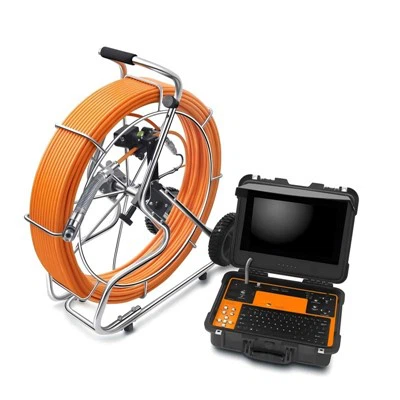
Hey there! As a supplier of HD sewer cameras, I often get asked about the difference between HD sewer cameras and regular ones. Today, I'll break it down for you in a way that's easy to understand.
Let's start by talking about what sewer cameras are for. Whether you're a plumber, a municipality worker, or just a homeowner dealing with some plumbing issues, sewer cameras can be a game - changer. They let you look inside pipes and sewers without having to dig them up, which saves a whole lot of time, money, and hassle.
Picture Quality
The most obvious difference between an HD sewer camera and a regular one is the picture quality. HD, or High - Definition, cameras offer a much sharper and clearer image. Regular sewer cameras usually have a lower resolution, which means the pictures they take can be a bit blurry or pixelated.
When you're using a regular sewer camera, it can sometimes be hard to tell exactly what's going on inside the pipe. For example, if there's a small crack or a blockage, it might not be obvious from the fuzzy image. On the other hand, an HD Sewer Camera gives you a crystal - clear view. You can see the tiniest details, like the texture of the pipe wall or the exact location of a root intrusion. This high - quality image is crucial for accurate diagnosis of plumbing problems.
Color Representation
Another aspect of picture quality is color representation. HD sewer cameras are better at capturing true colors. In a sewer environment, where there's often a lot of dirt, moisture, and strange substances, accurate color representation can make a big difference. For instance, a discolored area in a pipe could indicate a leak or corrosion. With an HD camera, you can see the exact color of the discoloration, which can help you determine the severity of the problem. Regular cameras may distort colors, making it harder to make these important judgments.
Low - Light Performance
Sewers are dark places, and that's where the low - light performance of a camera comes into play. HD sewer cameras are generally equipped with better lighting systems and more sensitive image sensors. This means they can capture clear images even in low - light conditions.
Regular sewer cameras might struggle in the dark. Their lights may not be bright enough, or their sensors may not be able to pick up enough light to create a decent image. As a result, you might end up with a lot of dark, shadowy areas in the picture, which can make it difficult to see what's really going on inside the pipe.
Durability
HD sewer cameras are often built to be more durable. They need to withstand the harsh environment of sewers, which includes water, chemicals, and rough surfaces. These cameras are usually made with high - quality materials and have better waterproofing and shock - resistant features.
Regular cameras may not be as tough. They might be more prone to damage from water leaks, bumps, or chemical exposure. If a camera breaks down while you're in the middle of an inspection, it can cause delays and cost you extra money to replace or repair it.


Data Storage and Transmission
HD sewer cameras usually have more advanced data storage and transmission capabilities. They can store high - resolution images and videos, which is useful for record - keeping and sharing with clients or colleagues. Many HD cameras also support wireless transmission, allowing you to view the footage on a separate device in real - time.
Regular cameras may have limited storage space and may not support wireless transmission. This can be a hassle if you need to quickly share the inspection results or if you want to keep a large number of records.
Cost
Of course, all these advanced features come at a price. HD sewer cameras are generally more expensive than regular ones. However, when you consider the long - term benefits, such as accurate diagnosis, reduced rework, and better durability, the investment can be well worth it.
If you're just starting out or have a limited budget, a regular sewer camera might seem like a more affordable option. But if you're a professional plumber or someone who frequently needs to perform sewer inspections, an HD sewer camera can save you money in the long run by improving efficiency and the quality of your work.
Our Product Range
We offer a variety of HD Sewer Camera products to meet different needs. For example, our Mini Pipe Camera is a great option for small - diameter pipes. It's compact and easy to maneuver, but still offers HD quality.
If you need to inspect longer pipes, our 200 ft Sewer Camera is a great choice. It has a long cable that can reach deep into the sewer system, and the HD image quality ensures you can see everything clearly.
We also have the 20mm Super Mini HD 30Mtr Plumbing Pipe Video Inspection Camera, which is perfect for plumbing inspections. It's small enough to fit into tight spaces, and the high - definition video it captures can help you quickly identify any plumbing issues.
And for those who need a more flexible solution, our Mini Drain Pipe Pipeline Inspection Camera System with 20m~60m (66~197ft) Cable offers a range of cable lengths to suit different inspection requirements.
Conclusion
In conclusion, the main differences between an HD sewer camera and a regular one lie in picture quality, low - light performance, durability, data storage and transmission, and cost. While regular cameras may be a more budget - friendly option, HD sewer cameras offer significant advantages, especially for professional users.
If you're in the market for a sewer camera and want to take your inspection work to the next level, I highly recommend considering an HD sewer camera. We're here to help you choose the right product for your needs. Whether you're a seasoned professional or just starting out in the plumbing industry, we can provide you with the best HD sewer camera solutions. If you're interested in our products, feel free to reach out and start a procurement discussion. We look forward to working with you!
References
- Industry reports on sewer camera technology
- Personal experience from working with different sewer camera models in the field