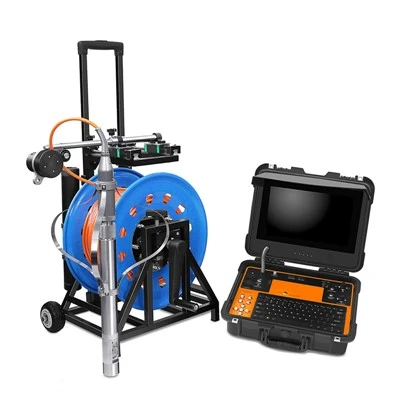
The field of view (FOV) of a Pan Tilt Borehole Camera is a crucial aspect that directly impacts its performance and usability in various applications. As a supplier of Pan Tilt Borehole Cameras, I understand the significance of this feature and its implications for our customers. In this blog, I will delve into the concept of the field of view, its importance in borehole inspections, and how our cameras are designed to optimize this parameter.
Understanding the Field of View
The field of view refers to the extent of the observable area that a camera can capture at a given time. It is typically measured in degrees and can be divided into two main types: horizontal and vertical. The horizontal field of view determines the width of the area that the camera can see from side to side, while the vertical field of view defines the height of the observable area.
In the context of a Pan Tilt Borehole Camera, the field of view is essential for providing a comprehensive view of the borehole interior. A wider field of view allows the camera to capture more of the surrounding environment in a single frame, reducing the need for excessive panning and tilting. This not only saves time but also ensures that no critical details are missed during the inspection process.


Factors Affecting the Field of View
Several factors can influence the field of view of a Pan Tilt Borehole Camera. These include the lens design, the sensor size, and the focal length of the lens.
- Lens Design: The design of the lens plays a significant role in determining the field of view. Wide-angle lenses are commonly used in borehole cameras to provide a broader perspective. These lenses have a shorter focal length, which allows them to capture a larger area. However, wide-angle lenses can also introduce distortion, especially at the edges of the frame. To minimize distortion, high-quality lenses with advanced optical correction techniques are used in our Pan Tilt Borehole Cameras.
- Sensor Size: The size of the camera sensor also affects the field of view. Larger sensors can capture more light and provide a wider field of view compared to smaller sensors. However, larger sensors also tend to be more expensive and may require more power. Our cameras are designed with high-resolution sensors that strike a balance between image quality and field of view.
- Focal Length: The focal length of the lens determines the magnification and the field of view. A shorter focal length results in a wider field of view, while a longer focal length provides a narrower but more magnified view. In borehole inspections, a combination of different focal lengths may be used depending on the specific requirements of the application. For example, a wide-angle lens may be used for an initial overview of the borehole, while a telephoto lens can be used to inspect specific areas in more detail.
Importance of a Wide Field of View in Borehole Inspections
A wide field of view is particularly important in borehole inspections for several reasons.
- Efficiency: As mentioned earlier, a wider field of view allows the camera to capture more of the borehole interior in a single frame. This reduces the time required for the inspection process, especially in large or complex boreholes. By minimizing the need for excessive panning and tilting, our cameras can significantly improve the efficiency of borehole inspections.
- Comprehensive Coverage: A wide field of view ensures that no critical details are missed during the inspection. It allows the inspector to see the entire cross-section of the borehole, including any cracks, fractures, or other defects. This comprehensive coverage is essential for accurate assessment and decision-making.
- Enhanced Safety: In some borehole applications, such as oil and gas wells, safety is of utmost importance. A wide field of view allows the inspector to quickly identify any potential hazards or safety issues, such as unstable rock formations or gas leaks. This early detection can help prevent accidents and ensure the safety of the inspection team.
Our Pan Tilt Borehole Cameras and Their Field of View
At our company, we offer a range of Pan Tilt Borehole Cameras with different field of view options to meet the diverse needs of our customers. Our cameras are equipped with high-quality lenses and sensors that provide a wide and clear field of view, even in challenging environments.
- Standard Field of View Cameras: Our standard cameras offer a horizontal field of view of up to 120 degrees and a vertical field of view of up to 90 degrees. These cameras are suitable for most general borehole inspection applications, providing a comprehensive view of the borehole interior.
- Wide-Angle Field of View Cameras: For applications that require an even wider field of view, we offer cameras with a horizontal field of view of up to 180 degrees. These wide-angle cameras are ideal for large boreholes or for inspecting areas with limited access.
- Customizable Field of View: In addition to our standard and wide-angle cameras, we also offer customizable field of view options. Our engineering team can work with you to design a camera with a specific field of view to meet your unique requirements.
Applications of Pan Tilt Borehole Cameras with a Wide Field of View
Pan Tilt Borehole Cameras with a wide field of view have a wide range of applications in various industries. Some of the common applications include:
- Geotechnical Investigations: In geotechnical investigations, borehole cameras are used to inspect the subsurface conditions, such as the presence of soil layers, rock formations, and groundwater. A wide field of view allows the geologist to obtain a more accurate understanding of the subsurface conditions, which is essential for engineering design and construction.
- Oil and Gas Wells: In the oil and gas industry, borehole cameras are used to inspect the wellbore for damage, corrosion, and other issues. A wide field of view helps the inspector to quickly identify any potential problems and take appropriate measures to ensure the safety and efficiency of the well.
- Mining: In mining operations, borehole cameras are used to inspect the underground tunnels and shafts for stability and safety. A wide field of view allows the miner to detect any signs of collapse or other hazards, which is crucial for preventing accidents and ensuring the well-being of the workers.
Conclusion
The field of view is a critical parameter in Pan Tilt Borehole Cameras, as it directly affects the efficiency, comprehensiveness, and safety of borehole inspections. As a supplier of high-quality Pan Tilt Borehole Cameras, we understand the importance of this feature and strive to provide our customers with cameras that offer a wide and clear field of view.
If you are interested in learning more about our Pan Tilt Borehole Cameras or have any specific requirements, please do not hesitate to contact us. Our team of experts will be happy to assist you and provide you with the best solutions for your borehole inspection needs.
References
- "Borehole Camera Technology and Applications." Journal of Geotechnical and Geoenvironmental Engineering, vol. 140, no. 10, 2014.
- "Advances in Downhole Camera Systems for Well Inspection." Proceedings of the SPE Annual Technical Conference and Exhibition, 2016.
- "The Role of Borehole Cameras in Mining Safety." International Journal of Mining Science and Technology, vol. 25, no. 3, 2015.