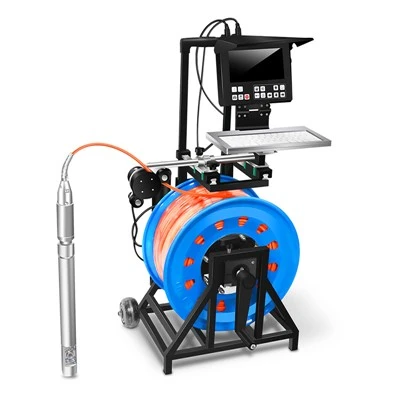
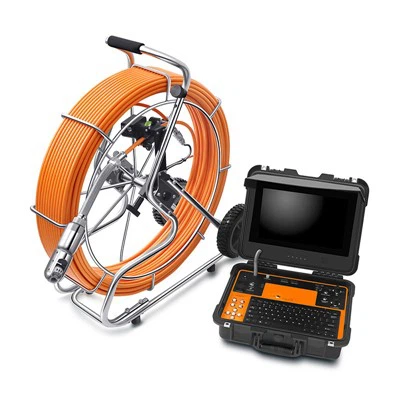
Hey there! As a supplier of Down Hole Cameras, I often get asked about the image compression ratio of these nifty devices. So, I thought I'd take some time to break it down for you.
First off, let's understand what image compression ratio means. In simple terms, it's the ratio of the size of an uncompressed image to the size of the same image after it's been compressed. Compression is crucial in down hole cameras because we're dealing with limited storage space and bandwidth when transmitting data from deep underground.
When it comes to down hole cameras, there are two main types of compression: lossy and lossless. Lossy compression reduces the file size by getting rid of some data that the human eye might not notice. This can significantly shrink the image size, but there's a trade - off. You might lose a bit of image quality in the process. On the other hand, lossless compression reduces the file size without losing any data. So, the image quality remains the same as the original, but the compression ratio isn't as high as with lossy compression.


Now, the ideal compression ratio for a down hole camera depends on a few factors. One of the key factors is the purpose of the camera. If you're using a Borewell Inspection Camera for a basic inspection of a borewell, you might be able to get away with a higher lossy compression ratio. This is because you're mainly looking for general details like cracks, blockages, or the condition of the well walls. A compression ratio of around 10:1 to 20:1 might work well in this case. With a 10:1 compression ratio, an uncompressed image of 10 megabytes would be reduced to 1 megabyte after compression.
However, if you're using a 100m Water Well Camera for more detailed analysis, such as looking for small leaks or fine sediment deposits, you'll probably want to go for a lower compression ratio or even lossless compression. In this scenario, a compression ratio of 2:1 to 5:1 might be more appropriate. This ensures that you don't miss any important details in the image.
Another factor that affects the compression ratio is the storage capacity of the camera. If your down hole camera has limited internal storage, you'll need to use a higher compression ratio to make the most of the available space. But keep in mind that if you go too high with the compression, you might end up with images that are too blurry or pixelated to be useful.
The bandwidth available for data transmission also plays a role. If you're transmitting the images in real - time from the down hole camera to the surface, a lower compression ratio might slow down the transmission. In such cases, you might have to balance between image quality and transmission speed by using a moderate compression ratio.
Let's talk about the technology behind the compression in down hole cameras. Most modern down hole cameras use advanced algorithms to achieve the desired compression. These algorithms are designed to analyze the image and determine which parts of the data can be safely removed or reduced without sacrificing too much quality. For example, some algorithms might focus on reducing the color depth of areas with uniform color, or they might simplify complex patterns that are less important for the inspection.
Now, you might be wondering how to choose the right compression ratio for your specific needs. Well, it's a bit of a trial - and - error process. I recommend starting with a moderate compression ratio and then testing the camera in the actual field conditions. Take a series of images at different depths and under different lighting conditions. Then, review the images to see if the quality is sufficient for your purpose. If the images are too blurry or you're missing important details, you can lower the compression ratio. If the storage is filling up too quickly or the transmission is too slow, you can increase the compression ratio.
As a Down Hole Camera supplier, I've seen firsthand how the right compression ratio can make a big difference in the effectiveness of these cameras. A well - chosen compression ratio ensures that you get clear, useful images while also making the most of the camera's storage and transmission capabilities.
If you're in the market for a Borehole Inspection Camera or any other type of down hole camera, and you're not sure about the compression ratio or any other technical aspect, don't hesitate to reach out. We're here to help you make the right choice for your specific application. Whether you're a professional in the water well industry, a geologist, or someone doing a home inspection, we can provide you with the expertise and the right camera to meet your needs.
So, if you're interested in purchasing a down hole camera or want to discuss your requirements further, feel free to contact us. We're ready to have a detailed conversation about your project and help you select the best camera with the optimal compression ratio. Let's work together to get the high - quality images you need from deep underground.
References:
- General knowledge of down hole camera technology and image compression principles.
- Industry experience as a Down Hole Camera supplier.