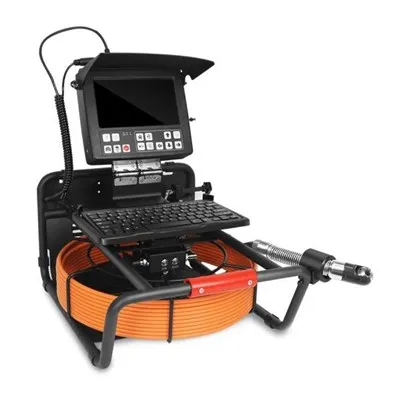
As a supplier of Pan Tilt Borehole Cameras, I often get asked about the maximum depth these nifty gadgets can reach. It's a valid question, especially when you're dealing with various applications like well inspections, geotechnical surveys, and underwater explorations. So, let's dive right in and explore this topic.
Understanding Pan Tilt Borehole Cameras
First off, what exactly is a Pan Tilt Borehole Camera? Well, it's a specialized camera designed to be lowered into boreholes, wells, or other narrow spaces. The "pan tilt" feature allows the camera to rotate horizontally (pan) and vertically (tilt), giving you a 360 - degree view of the surroundings. This is super useful for getting a comprehensive look at what's going on deep underground or underwater.
Factors Affecting the Maximum Depth
There are several factors that can determine how deep a Pan Tilt Borehole Camera can go. Let's break them down one by one.
Cable Strength
The cable that connects the camera to the surface equipment is crucial. It not only has to support the weight of the camera but also withstand the tension and friction as it's lowered into the borehole. High - strength cables made of materials like steel or specialized synthetic fibers can handle greater depths. For example, if the cable is too weak, it might snap under the weight of the camera at a relatively shallow depth.
Pressure Resistance
As the camera goes deeper, the water or soil pressure increases. The camera housing needs to be able to withstand this pressure without getting damaged. Most high - quality Pan Tilt Borehole Cameras are built with pressure - resistant materials and sealed to prevent water ingress. If the camera can't handle the pressure, it could malfunction or even get destroyed.
Signal Transmission
The camera needs to send the video signal back to the surface equipment. At greater depths, the signal can weaken due to interference and the length of the cable. Advanced signal transmission technologies, such as fiber - optic cables, can help maintain a strong and clear signal over long distances. If the signal is lost or becomes too distorted, you won't be able to see what the camera is capturing.
Typical Depth Ranges
Now, let's talk about the typical depth ranges you can expect from Pan Tilt Borehole Cameras.
Shallow Depths (Up to 50m)
For many basic applications like small - scale well inspections or near - surface geotechnical surveys, cameras that can reach up to 50m are sufficient. These cameras are usually more affordable and easier to handle. They're great for getting a quick look at what's going on in the upper layers of the ground or in a relatively shallow well.
Medium Depths (50m - 150m)
Cameras designed for medium depths are more robust and can handle higher pressures. They're commonly used in larger well projects, environmental monitoring, and some underwater exploration tasks. With these cameras, you can get a more detailed view of the subsurface conditions at greater depths.
Deep Depths (Over 150m)
Reaching depths over 150m requires a high - end Pan Tilt Borehole Camera. These cameras are built to withstand extreme pressure and have advanced signal transmission systems. They're used in deep - well drilling projects, deep - sea exploration, and other challenging applications.


Our Product Offerings
At our company, we offer a range of Pan Tilt Borehole Cameras with different depth capabilities.
For those who need a camera for shallow depths, our 100m Water Well Camera is a great option. It's easy to use and provides clear video footage, making it perfect for small - scale well inspections.
If you're looking for something that can handle medium depths, our Underwater Borehole Camera is a reliable choice. It has a sturdy construction and can withstand the pressure at depths up to 150m.
For deep - depth applications, our Underwater 45mm Camera 200m Borehole Video Inspection Camera with Electrical Winch is the top - of - the - line product. It's equipped with a high - strength cable, advanced pressure - resistant housing, and excellent signal transmission technology to ensure clear video footage even at depths of up to 200m.
Real - World Examples
Let's take a look at some real - world examples of how these cameras are used at different depths.
In a small rural community, a well inspector used our 100m Water Well Camera to check the condition of a local well. The camera easily reached the bottom of the well, which was about 30m deep, and provided clear images of any potential issues like cracks or blockages.
In a large - scale construction project, an engineering team used our Underwater Borehole Camera to inspect the foundation piles. The piles were about 120m deep, and the camera was able to capture detailed images of the pile integrity, helping the team make informed decisions about the project.
In a deep - sea research project, scientists used our 200m Borehole Video Inspection Camera to explore an underwater cave system. The camera reached depths of over 180m, sending back amazing footage of the unique underwater environment.
Choosing the Right Camera for Your Needs
When choosing a Pan Tilt Borehole Camera, it's important to consider your specific needs. Think about the depth you need to reach, the type of environment (water, soil, etc.), and your budget. If you're not sure which camera is right for you, our team of experts is here to help.
Conclusion
So, what's the maximum depth a Pan Tilt Borehole Camera can reach? Well, it depends on several factors like cable strength, pressure resistance, and signal transmission. But with the right technology and design, these cameras can reach depths of up to 200m or more.
At our company, we're committed to providing high - quality Pan Tilt Borehole Cameras that meet the diverse needs of our customers. Whether you're a well inspector, a geotechnical engineer, or a deep - sea explorer, we have the right camera for you.
If you're interested in purchasing a Pan Tilt Borehole Camera or have any questions about our products, don't hesitate to get in touch. We're always happy to have a chat about your requirements and help you find the perfect camera for your project.
References
- General knowledge about borehole camera technology and its applications.
- Internal product specifications and performance data from our company's Pan Tilt Borehole Cameras.