


Yo, what's up! I'm a supplier of CCTV pipe crawler robots, and today I wanna talk about a super interesting topic: What is the maximum speed of a CCTV pipe crawler robot?
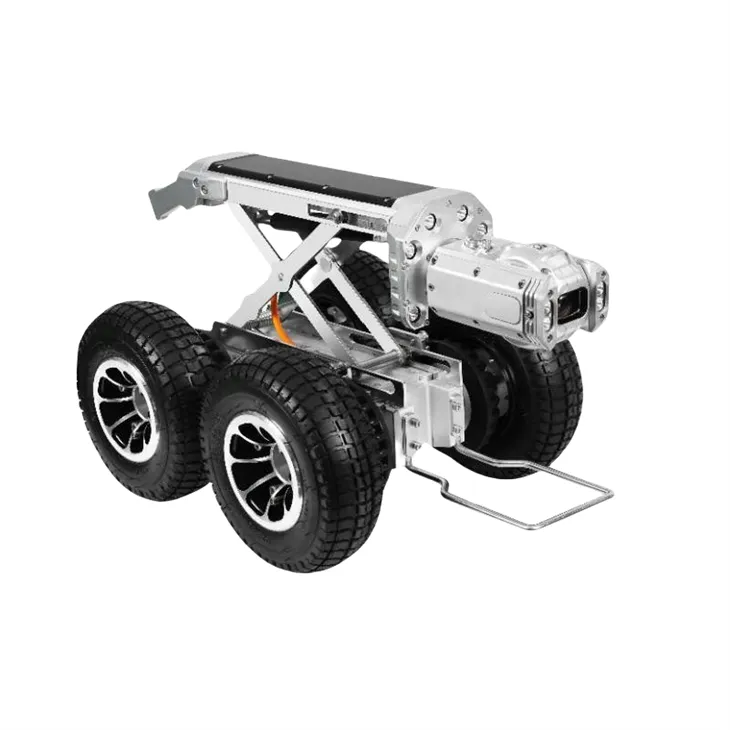
First off, let's understand what a CCTV pipe crawler robot is. These little guys are like the secret agents of the underground pipe world. They're equipped with cameras and can navigate through pipes to check for damages, blockages, and other issues. You can check out more about Pipe Crawler and Pipe Robot on our website.
Now, when it comes to the maximum speed of these robots, it's not a one - size - fits - all answer. There are a bunch of factors that can affect how fast they can go.
Factors Affecting the Maximum Speed
Pipe Conditions
The state of the pipes plays a huge role. If the pipes are smooth and free of debris, the robot can move at a relatively higher speed. But if there are rough patches, sharp turns, or a lot of sediment, the speed has to be reduced. For example, in a brand - new, well - maintained PVC pipe, the robot can zip along. However, in an old cast - iron pipe with rust and scale buildup, it has to slow down to avoid getting stuck or causing damage to itself.
Robot Design
The design of the CCTV pipe crawler robot also matters. Some robots are built for speed, with lightweight materials and efficient motor systems. Others are more focused on stability and durability, which might sacrifice a bit of speed. For instance, a robot with large, wide - treaded wheels might be more stable on uneven surfaces but could be slower compared to one with smaller, high - speed wheels.

Camera Requirements
The purpose of the inspection can also limit the speed. If you need high - resolution images and detailed inspections, the robot has to move slowly to allow the camera to capture clear footage. On the other hand, if it's just a quick survey to get a general idea of the pipe's condition, the speed can be increased. And if you're interested in a Storm Sewer Camera, which is often used in these inspections, you can find more info on our site.
Typical Maximum Speeds
In general, most CCTV pipe crawler robots have a maximum speed ranging from 0.5 meters per second to 2 meters per second. That might not sound super fast, but considering they're operating in tight, confined spaces, it's actually pretty decent.
For small - diameter pipes (less than 150 mm), the speed is usually on the lower end of the spectrum. This is because the space is limited, and the robot has to be more careful to avoid hitting the walls. In larger pipes (over 600 mm), the robot can often reach closer to the higher end of the speed range.
Let's break it down a bit more. Some entry - level robots might have a maximum speed of around 0.5 - 1 meter per second. These are great for basic inspections in smaller pipes or in areas where precision is key. Mid - range robots can typically hit speeds of 1 - 1.5 meters per second, which is suitable for a wide variety of pipe sizes and inspection tasks. High - end, professional - grade robots can sometimes reach speeds up to 2 meters per second, making them ideal for large - scale projects where time is of the essence.
Importance of Speed in Pipe Inspections
Speed isn't the only thing that matters in pipe inspections, but it can have a big impact. A faster robot can cover more ground in less time, which means you can complete more inspections in a day. This is especially important for companies that have a high volume of pipe inspections to do.
However, it's a balance. You don't want to sacrifice the quality of the inspection for speed. If the robot is moving too fast, it might miss important details like small cracks or early signs of corrosion. So, finding the right speed for each specific inspection is crucial.
How We Ensure Optimal Speed
As a supplier, we take a lot of steps to make sure our CCTV pipe crawler robots can achieve the best possible speed while maintaining accuracy.
First, we use high - quality materials in the construction of our robots. Lightweight yet strong materials reduce the overall weight of the robot, allowing it to move more efficiently. Our motor systems are carefully calibrated to provide the right amount of power for different pipe conditions.
We also offer advanced control systems that allow operators to adjust the speed based on the real - time feedback from the camera and sensors. This means that as the robot encounters different pipe conditions, the operator can make on - the - fly adjustments to keep the inspection going smoothly.
Conclusion
So, to sum it up, the maximum speed of a CCTV pipe crawler robot can vary depending on pipe conditions, robot design, and camera requirements. Most robots have a speed range of 0.5 - 2 meters per second, with different levels of robots suitable for different types of inspections.
If you're in the market for a CCTV pipe crawler robot, whether it's for a small - scale project or a large - scale infrastructure inspection, we've got you covered. Our robots are designed to offer the best combination of speed, accuracy, and reliability. Don't hesitate to reach out if you have any questions or if you're interested in a purchase. We're here to help you find the perfect robot for your needs and ensure that your pipe inspections are a success.
References
- Industry research on CCTV pipe crawler robot performance
- Manufacturer specifications of various CCTV pipe crawler robots


