


What is the minimum bend radius a Pipe Crawler can pass through?
As a leading supplier of Pipe Crawlers, I often encounter questions from clients about the technical capabilities of our equipment. One of the most frequently asked questions is: What is the minimum bend radius a Pipe Crawler can pass through? This seemingly simple question has far - reaching implications for pipe inspection and maintenance operations, and understanding the answer is crucial for choosing the right equipment for the job.
Understanding the Concept of Bend Radius
The bend radius of a pipe refers to the radius of curvature of a bend in the pipe. In the context of a Pipe Crawler, the minimum bend radius is the smallest radius of curvature of a pipe bend through which the crawler can navigate without getting stuck or causing damage to the equipment or the pipe itself.
Several factors influence the minimum bend radius that a Pipe Crawler can handle. These factors include the design of the crawler, the materials used in its construction, and the type of pipes it is intended to inspect.
Design - related Factors
The physical design of the Pipe Crawler plays a significant role in determining its ability to pass through bends. Crawlers with a compact and flexible design are generally better at navigating tight bends. For example, some of our CCTV Crawler Camera systems are equipped with modular segments that can flex and adapt to the shape of the pipe bend. This flexibility allows the crawler to smoothly transition through bends with relatively small radii.
The wheelbase and the number of wheels on the crawler also impact its bend - passing capabilities. A shorter wheelbase provides more maneuverability, enabling the crawler to make sharper turns. Additionally, crawlers with multiple wheels can distribute the load more evenly, which is beneficial when navigating bends. Our Pipe Inspection Camera Robot models are designed with a carefully optimized wheelbase and wheel arrangement to enhance their performance in curved pipes.
Material and Construction
The materials used in the construction of the Pipe Crawler can affect its flexibility and durability in bends. Crawlers made from high - quality, flexible materials such as rubber or certain types of plastics are more likely to withstand the stresses of bending. These materials can deform slightly as the crawler passes through a bend, reducing the risk of mechanical failure.
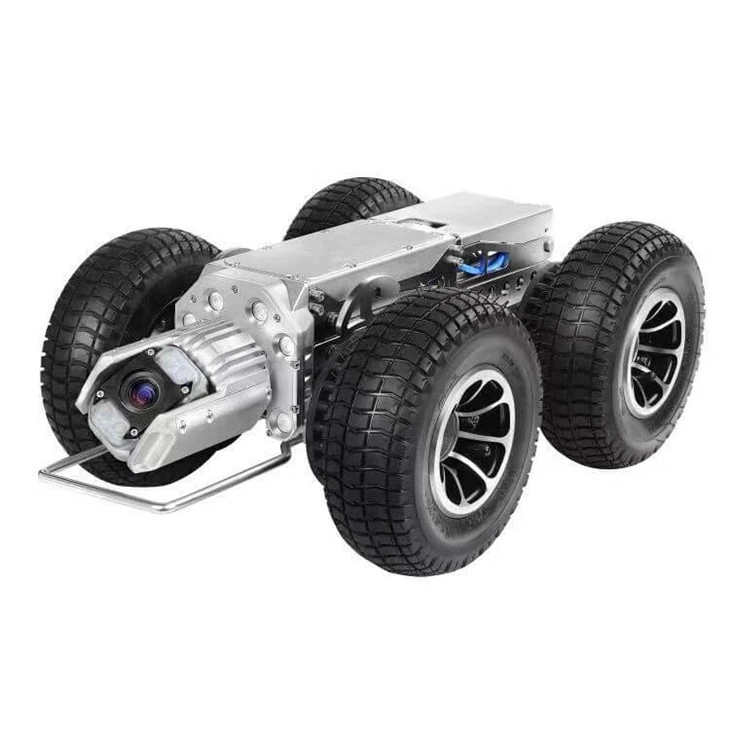

Moreover, the construction of the crawler's joints and moving parts is essential. Well - engineered joints ensure smooth movement and allow the crawler to adjust its shape as it rounds a bend. Our company uses advanced manufacturing techniques to create robust joints that can withstand repeated bending without breaking down.
Pipe - related Factors
The type and condition of the pipes being inspected also have a direct impact on the minimum bend radius a Pipe Crawler can handle. Different pipe materials, such as PVC, cast iron, or steel, have different internal surface characteristics and levels of stiffness. For instance, PVC pipes are generally smoother and more flexible than cast iron pipes, which can make it easier for a crawler to navigate through bends in PVC pipes.
Pipe diameter is another crucial factor. Smaller - diameter pipes typically have tighter bends, which require a more agile Pipe Crawler. Our Crawler Drain Camera models are specifically designed to operate in small - diameter pipes and can handle relatively tight bends.
Typical Minimum Bend Radius Values
The minimum bend radius that a Pipe Crawler can pass through can vary widely depending on the above - mentioned factors. In general, for standard - sized pipes used in municipal and industrial applications, our Pipe Crawlers can typically handle bends with a radius as small as 1 to 2 times the pipe diameter.
For example, in a 6 - inch diameter pipe, our crawlers can usually navigate bends with a radius of 6 to 12 inches. However, in some highly specialized models designed for extremely tight spaces, such as those used in CCTV Stormwater inspection in narrow conduits, the minimum bend radius can be even smaller, approaching 0.5 times the pipe diameter in some cases.
Importance of Knowing the Minimum Bend Radius
Understanding the minimum bend radius that a Pipe Crawler can pass through is crucial for several reasons. Firstly, it helps in project planning. By knowing the capabilities of the crawler, engineering teams can accurately assess whether a particular crawler is suitable for a specific pipe inspection job. This can prevent costly delays and equipment damage that may occur if an inappropriate crawler is used.
Secondly, it ensures the safety and integrity of the inspection process. A crawler that is unable to pass through a bend can get stuck, causing potential damage to the pipe and the crawler itself. In some cases, retrieving a stuck crawler can be a complex and time - consuming operation. By choosing a crawler with the appropriate minimum bend radius capability, these risks can be minimized.
How We Can Assist You
As a Pipe Crawler supplier, we take pride in providing our customers with the most accurate and detailed information about the capabilities of our products. Our technical support team is always available to help you determine the most suitable Pipe Crawler for your specific pipe inspection needs. Whether you are inspecting a complex network of stormwater pipes or a simple drain system, we can help you select a crawler that can handle the required bend radii.
If you are interested in learning more about our Pipe Crawlers and their performance in terms of minimum bend radius, or if you are ready to start a procurement discussion, we encourage you to reach out to us. Our team is eager to work with you to find the best solution for your pipe inspection and maintenance projects.
Conclusion
The minimum bend radius a Pipe Crawler can pass through is a critical factor that depends on a combination of design, material, and pipe - related factors. By carefully considering these factors and choosing the right crawler, you can ensure the success of your pipe inspection operations. As a trusted supplier, we are committed to providing high - quality Pipe Crawlers that meet the diverse needs of our customers. If you have any questions or are interested in purchasing our products, please do not hesitate to contact us for a detailed discussion.
References
- Pipe Inspection Handbook. Various industry - specific publications on pipe inspection technologies and equipment capabilities.
- Engineering studies on the design and performance of robotic crawlers for pipe inspection. Academic and industry - sponsored research papers.


