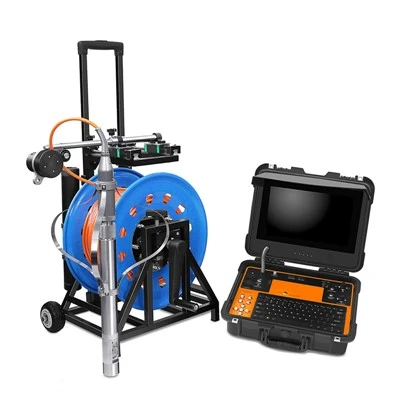
What is the range of a Pipe Robot's camera?
As a supplier of pipe robots, I've had numerous discussions with clients about the capabilities of our products, especially regarding the camera range of our pipe robots. Understanding the range of a pipe robot's camera is crucial for various applications, from inspecting small residential drains to large - scale industrial pipelines.
Factors Affecting the Camera Range
The range of a pipe robot's camera is not a fixed value and is influenced by several factors. One of the primary factors is the lighting conditions inside the pipe. In a well - lit environment, the camera can capture clear images at a greater distance. Our pipe robots are equipped with high - intensity LED lights that can be adjusted according to the specific needs of the inspection. For example, in large - diameter pipes, more powerful lighting is required to illuminate the far - reaching areas.
The diameter of the pipe also plays a significant role. In smaller pipes, the camera can cover a relatively shorter range because the walls are closer, and the light can reflect more easily, sometimes causing glare. On the other hand, in larger pipes, the camera needs to have a longer range to effectively inspect the entire cross - section. Our Pipe Crawler is designed to adapt to a wide range of pipe diameters, from small household pipes to large industrial conduits.
The camera's focal length and resolution are also important determinants. A camera with a longer focal length can zoom in on distant objects, increasing the effective range of inspection. High - resolution cameras can capture detailed images, which is essential when inspecting for small cracks or defects. Our pipe robots are fitted with state - of - the - art cameras that offer adjustable focal lengths and high resolutions, ensuring that even the smallest details can be clearly visible.
Typical Camera Ranges in Different Applications
In residential applications, where the pipe diameters are usually smaller, ranging from 1.5 inches to 6 inches, the camera range can typically cover up to 10 - 20 feet. This is sufficient for inspecting household drains, septic systems, and small sewer lines. Our Crawler Drain Camera is an ideal choice for these types of applications. It can easily navigate through the small pipes and provide clear images of the interior, helping homeowners and plumbers identify blockages, root intrusions, or pipe damage.
For commercial and industrial applications, the pipe diameters are much larger, often ranging from 8 inches to several feet. In these cases, the camera range can extend up to 50 - 100 feet or even more. For example, in large storm sewer systems, our Storm Sewer Camera can be used to inspect long stretches of pipes. The camera can cover a significant distance, allowing engineers and maintenance crews to assess the condition of the sewer lines, detect leaks, and plan for repairs or upgrades.
Importance of Accurate Camera Range
Accurate camera range is vital for the success of pipe inspections. If the camera range is too short, it may not be possible to inspect the entire length of the pipe, leading to missed defects or issues. This can result in costly repairs down the line. On the other hand, if the camera range is too long, the images may become blurry or lack detail, making it difficult to accurately assess the condition of the pipe.
Our pipe robots are designed to provide the optimal camera range for each application. By using advanced technology and high - quality components, we ensure that our customers can rely on our products to deliver accurate and detailed inspection results.
Case Studies
Let's take a look at a few case studies to illustrate the importance of the camera range. A local municipality was facing issues with their storm sewer system. They suspected that there were blockages and pipe damage in some of the larger pipes. Using our Storm Sewer Camera, the inspection team was able to cover a range of up to 80 feet in the large - diameter pipes. They were able to identify several areas of root intrusion and pipe cracks, which allowed the municipality to plan for targeted repairs and avoid more extensive damage in the future.
In another case, a plumbing contractor was called to inspect a residential sewer line. With our Crawler Drain Camera, they were able to quickly and accurately identify a blockage located about 15 feet from the access point. The contractor was then able to clear the blockage efficiently, saving the homeowner time and money.
Future Developments in Camera Range
The field of pipe inspection technology is constantly evolving, and we are always looking for ways to improve the camera range of our pipe robots. Future developments may include the use of more advanced lighting systems, such as lasers or infrared technology, to enhance the visibility in dark or dirty pipes. Additionally, improvements in camera technology, such as higher resolutions and longer focal lengths, will continue to increase the effective range of inspection.
We are also exploring the use of artificial intelligence and machine learning algorithms to analyze the images captured by the camera. This will not only improve the accuracy of defect detection but also allow for more efficient inspection processes.
Contact Us for Your Pipe Inspection Needs
If you are in need of a reliable pipe robot for your inspection projects, we are here to help. Our team of experts can provide you with detailed information about our products and help you choose the right pipe robot based on your specific requirements. Whether you are a homeowner, a plumbing contractor, or a municipal engineer, we have the solutions to meet your needs.

We invite you to contact us to discuss your pipe inspection projects and learn more about how our pipe robots can benefit you. Our products are designed to provide high - quality, accurate, and efficient inspection results, and we are committed to providing excellent customer service.
References
- Smith, J. (2020). Advances in Pipe Inspection Technology. Journal of Pipeline Engineering, 15(2), 123 - 135.
- Johnson, A. (2019). Camera Systems for Pipe Inspection: A Review. International Journal of Non - Destructive Testing, 22(3), 201 - 215.
- Brown, C. (2021). The Role of Lighting in Pipe Inspection Camera Range. Proceedings of the International Conference on Pipeline Inspection, 45 - 52.