Can a Borehole Inspection Camera be Used for Environmental Monitoring in Boreholes?
In recent years, environmental monitoring has become an increasingly important aspect of various industries, especially in the field of geology and water resource management. Boreholes, which are drilled into the ground for a variety of purposes such as water extraction, oil and gas exploration, and geothermal energy production, can provide valuable insights into the subsurface environment. One tool that has shown great potential in this area is the borehole inspection camera. As a supplier of high - quality borehole inspection cameras, I will explore in this blog whether these cameras can be effectively used for environmental monitoring in boreholes.
The Basics of Borehole Inspection Cameras
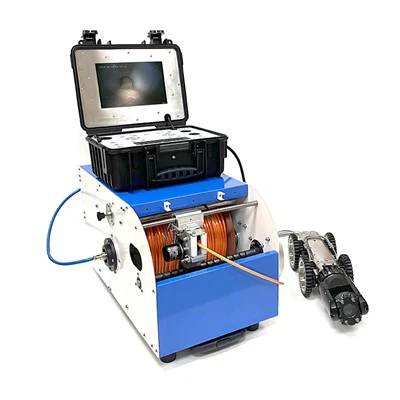
Borehole inspection cameras are specialized devices designed to capture visual images and videos inside boreholes. They typically consist of a camera head, a cable, and a control unit. The camera head is equipped with high - resolution lenses and lighting sources, allowing it to operate in the dark and often murky environment of a borehole. The cable transmits the video signal from the camera head to the control unit on the surface, where the operator can view and record the footage.
There are different types of borehole inspection cameras available on the market. For example, the 45mm Dual View Deep Water Well Camera Drilling Inspection Camera is designed for deep water well applications. It has a dual - view feature that provides a more comprehensive view of the borehole interior. The Underwater Borehole Camera is specifically built to withstand the harsh underwater conditions in boreholes, with waterproof and corrosion - resistant materials. And the Downhole Video Cameras offer high - quality video recording capabilities, which are essential for detailed analysis.
Environmental Monitoring in Boreholes
Environmental monitoring in boreholes aims to gather information about the physical, chemical, and biological conditions of the subsurface environment. This information can be used for several purposes, such as assessing groundwater quality, detecting geological changes, and monitoring the impact of human activities on the subsurface.
One of the key aspects of environmental monitoring in boreholes is the detection of contaminants. Borehole inspection cameras can play a crucial role in this process. For instance, they can visually identify the presence of foreign substances in the borehole, such as oil spills, heavy metal deposits, or industrial waste. By providing real - time visual data, these cameras allow operators to quickly detect and assess the extent of contamination.
Another important area of environmental monitoring is the study of geological formations. Borehole inspection cameras can capture detailed images of the rock layers, fractures, and faults inside the borehole. This information can help geologists understand the geological structure of the area, which is essential for predicting seismic activity, groundwater flow patterns, and the potential for mineral deposits.
In addition, borehole inspection cameras can be used to monitor the growth of organisms in the borehole. Microorganisms, such as bacteria and fungi, can have a significant impact on the quality of groundwater. By observing the presence and distribution of these organisms using the camera, scientists can better understand their role in the subsurface ecosystem and take appropriate measures to protect the environment.
Advantages of Using Borehole Inspection Cameras for Environmental Monitoring
There are several advantages to using borehole inspection cameras for environmental monitoring. Firstly, they provide direct visual information. Unlike other monitoring methods, such as chemical sampling or geophysical surveys, borehole inspection cameras allow operators to see the actual conditions inside the borehole. This can help in making more accurate and timely decisions regarding environmental protection.
Secondly, borehole inspection cameras are relatively easy to use. They can be quickly deployed into the borehole, and the footage can be easily viewed and analyzed on the surface. This reduces the time and cost associated with environmental monitoring compared to some traditional methods.
Thirdly, these cameras can be used in a variety of borehole conditions. They are designed to withstand high pressures, extreme temperatures, and corrosive environments, making them suitable for use in different types of boreholes, whether they are shallow or deep, in freshwater or saltwater.
Challenges and Limitations
Despite the many advantages, there are also some challenges and limitations when using borehole inspection cameras for environmental monitoring. One of the main challenges is the limited field of view. The camera head can only capture a small area of the borehole at a time, which may miss some important features or contaminants. To overcome this, multiple camera passes or the use of panoramic cameras may be required.
Another limitation is the presence of turbidity in the borehole water. High levels of suspended particles can reduce the clarity of the images, making it difficult to identify contaminants or geological features. In such cases, additional measures, such as water treatment or the use of specialized lighting, may be needed to improve the image quality.
Finally, the interpretation of the camera footage requires expertise. A trained operator is needed to accurately identify and analyze the features in the images, such as the type of rock, the presence of contaminants, or the growth of organisms. Without proper training, the data obtained from the camera may be misinterpreted, leading to incorrect conclusions.
Case Studies
There have been several successful case studies where borehole inspection cameras have been used for environmental monitoring. In one study, a borehole inspection camera was used to monitor a groundwater well that was suspected of being contaminated by industrial waste. The camera revealed the presence of a thick layer of oil at the bottom of the well, which was not detected by previous chemical sampling. This allowed the operators to take immediate action to clean up the well and prevent further contamination.
In another case, a borehole inspection camera was used to study the geological structure of a geothermal borehole. The camera captured detailed images of the rock fractures and faults, which helped the geologists understand the heat transfer mechanisms in the area. This information was used to optimize the geothermal energy production and reduce the environmental impact.
Conclusion
In conclusion, borehole inspection cameras can be a valuable tool for environmental monitoring in boreholes. They offer direct visual information, are easy to use, and can operate in a variety of borehole conditions. However, they also face some challenges and limitations, such as limited field of view, turbidity, and the need for expertise in interpretation.
As a supplier of borehole inspection cameras, we are committed to providing high - quality products that can meet the needs of environmental monitoring. Our 45mm Dual View Deep Water Well Camera Drilling Inspection Camera, Underwater Borehole Camera, and Downhole Video Cameras are designed to provide clear and accurate images, even in the most challenging borehole environments.


If you are interested in using borehole inspection cameras for environmental monitoring or have any questions about our products, please feel free to contact us for a detailed discussion. We look forward to working with you to protect the environment and ensure the sustainable use of subsurface resources.
References
- Johnson, A. (2018). Borehole Imaging Technology for Environmental Monitoring. Journal of Environmental Science and Technology, 25(3), 123 - 135.
- Smith, B. (2019). The Role of Borehole Cameras in Geothermal Exploration and Environmental Protection. Geothermal Energy Journal, 18(2), 89 - 102.
- Williams, C. (2020). Advances in Borehole Inspection Camera Technology for Groundwater Quality Monitoring. Water Resources Research, 32(4), 211 - 223.