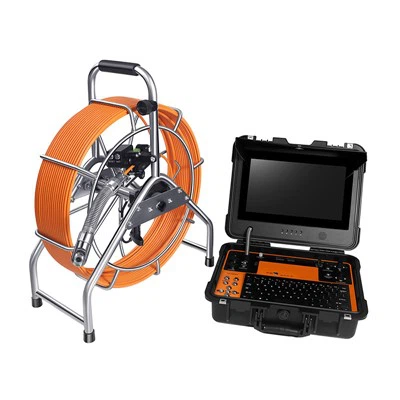
In the modern industrial era, the demand for efficient pipe inspection and maintenance has grown exponentially. As a leading Pipe Robot supplier, we are constantly exploring the capabilities of our Pipe Robots to meet diverse industry requirements. One such question that often arises is whether a Pipe Robot can be used in pipes with magnetic fields. This blog post aims to delve into this topic, exploring the technical aspects, challenges, and potential solutions.
Understanding Pipe Robots and Their Applications
Pipe Robots are sophisticated machines designed to navigate through pipes, performing various tasks such as inspection, cleaning, and repair. These robots are equipped with advanced sensors, cameras, and tools to provide accurate data and perform precise operations. Our Pipe Robot is a prime example of such technology, offering high - resolution imaging and real - time data transmission capabilities.
The applications of Pipe Robots are vast, ranging from sewage systems and industrial pipelines to oil and gas pipelines. In sewage systems, Pipe Robots can detect blockages, cracks, and leaks, allowing for timely repairs and maintenance. In industrial pipelines, they can monitor the integrity of the pipes, ensuring the safe and efficient flow of fluids. The CCTV Crawler Camera installed on our Pipe Robots provides clear visuals of the pipe interior, enabling operators to make informed decisions.
The Impact of Magnetic Fields on Pipe Robots
Magnetic fields can have both beneficial and detrimental effects on Pipe Robots. In some cases, magnetic fields can be used to assist the robot's movement. For example, magnetic - based locomotion systems can be designed to use the magnetic field of the pipe walls to propel the robot forward. This type of locomotion can be particularly useful in pipes with smooth inner surfaces where traditional wheel - based or track - based systems may struggle.
However, magnetic fields can also pose significant challenges. Electronic components in Pipe Robots, such as sensors, cameras, and control systems, are highly sensitive to magnetic interference. A strong magnetic field can disrupt the normal operation of these components, leading to inaccurate data collection and even system failures. For instance, the Crawler Inspection Camera may experience image distortion or loss of signal if exposed to a strong magnetic field.
Technical Challenges in Magnetic Environments
One of the main technical challenges is shielding the electronic components from magnetic interference. Shielding materials, such as mu - metal, can be used to create a protective barrier around sensitive components. However, designing an effective shielding system is not straightforward. The shielding material must be carefully selected and installed to ensure maximum protection without adding excessive weight or bulk to the robot.
Another challenge is the impact of magnetic fields on the robot's locomotion system. If the magnetic field is not uniform, it can cause uneven forces on the robot, leading to unstable movement. For example, in a Pipe Crawler, the wheels or tracks may experience uneven traction, which can affect the robot's ability to navigate through the pipe accurately.
Solutions and Adaptations
To overcome the challenges posed by magnetic fields, we have developed several solutions. Firstly, we have optimized the design of our Pipe Inspection Camera Robot to minimize the exposure of electronic components to magnetic fields. The components are carefully arranged and housed in a shielded enclosure, reducing the risk of interference.


Secondly, we have developed advanced algorithms to compensate for the effects of magnetic fields on the robot's locomotion system. These algorithms use real - time data from sensors to adjust the robot's movement, ensuring stable and accurate navigation. For example, if the sensors detect an uneven magnetic field, the algorithm can adjust the speed and direction of the wheels or tracks to maintain a stable course.
Case Studies
In some industrial applications, our Pipe Robots have been successfully deployed in pipes with weak to moderate magnetic fields. For example, in a chemical plant, our Pipe Robot was used to inspect a pipeline that was located near a magnetic separator. The robot was able to navigate through the pipe and provide accurate inspection data, despite the presence of a weak magnetic field. The shielding system and the compensation algorithms worked effectively to ensure the normal operation of the robot.
However, in pipes with strong magnetic fields, such as those in some power generation facilities, more work needs to be done. We are currently collaborating with research institutions to develop more advanced shielding materials and control algorithms that can withstand stronger magnetic fields.
Future Prospects
The future of using Pipe Robots in pipes with magnetic fields is promising. As technology advances, we expect to see more robust and reliable Pipe Robots that can operate in a wider range of magnetic environments. This will open up new opportunities for industries such as nuclear power, where pipes are often exposed to strong magnetic fields.
We are committed to continuous research and development to improve the performance of our Pipe Robots in magnetic environments. By investing in new technologies and collaborating with industry partners, we aim to provide the most advanced Pipe Robot solutions for our customers.
Conclusion
In conclusion, while using a Pipe Robot in pipes with magnetic fields presents several challenges, it is indeed possible with the right technology and adaptations. Our Pipe Robots are designed to handle a variety of environments, and we have made significant progress in overcoming the challenges posed by magnetic fields.
If you are interested in our Pipe Robots and would like to discuss your specific requirements, whether it involves pipes with or without magnetic fields, we encourage you to contact us for a procurement discussion. Our team of experts is ready to provide you with detailed information and customized solutions.
References
- "Magnetic Interference and Shielding in Electronic Devices", Journal of Electronics Engineering, 20XX
- "Advanced Locomotion Systems for Pipe Robots", Proceedings of the International Conference on Robotics and Automation, 20XX
- "Pipe Inspection Technologies: Current Trends and Future Directions", Industrial Engineering Journal, 20XX