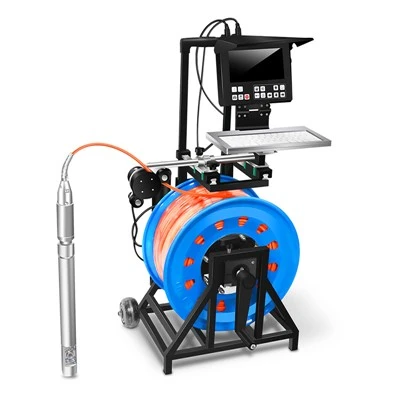
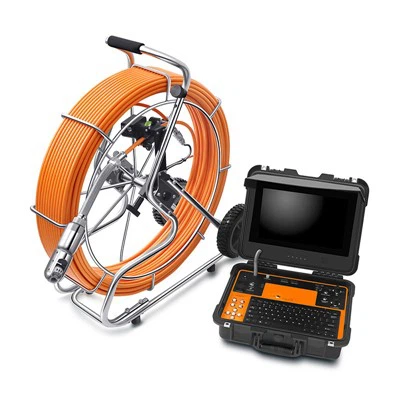
As a supplier of Pipe Camera Systems, I've had the privilege of witnessing firsthand the transformative power of these remarkable tools in the field of pipeline inspection. One of the most critical components of a Pipe Camera System is its lighting, which plays a pivotal role in ensuring clear and accurate visual data. In this blog, I'll delve into the intricacies of how the lighting in a Pipe Camera System works, exploring the different types of lighting used, their advantages, and the factors that influence their performance.
The Importance of Lighting in Pipe Camera Systems
Before we dive into the technical details, let's first understand why lighting is so crucial in Pipe Camera Systems. When inspecting pipelines, the interior environment is often dark, dirty, and filled with debris. Without proper lighting, it would be nearly impossible to obtain clear and detailed images of the pipeline's condition. Good lighting allows the camera to capture sharp, well-lit images, enabling inspectors to identify defects, cracks, blockages, and other issues with precision.
Types of Lighting Used in Pipe Camera Systems
There are several types of lighting sources commonly used in Pipe Camera Systems, each with its own unique characteristics and advantages.
LED Lighting
LED (Light Emitting Diode) lighting has become the industry standard for Pipe Camera Systems due to its numerous benefits. LEDs are energy-efficient, producing a high amount of light while consuming relatively little power. This is particularly important in battery-powered systems, as it extends the camera's operating time. LEDs also have a long lifespan, reducing the need for frequent replacement.
Another advantage of LED lighting is its ability to produce a focused and uniform beam of light. This helps to illuminate the pipeline evenly, minimizing shadows and ensuring clear visibility. LEDs can be designed to emit light in different colors, which can be useful for specific inspection tasks. For example, white light is commonly used for general inspection, while infrared light can be used for detecting leaks or identifying certain types of materials.
Halogen Lighting
Halogen lighting was once a popular choice for Pipe Camera Systems, but it has largely been replaced by LED lighting in recent years. Halogen bulbs produce a bright, white light, but they are less energy-efficient than LEDs and have a shorter lifespan. Halogen bulbs also generate a significant amount of heat, which can be a concern in enclosed spaces.
Fiber Optic Lighting
Fiber optic lighting is another option for Pipe Camera Systems. In this system, light is transmitted through a fiber optic cable to the camera head. Fiber optic lighting can provide a high-intensity, focused beam of light, making it suitable for inspecting long or large-diameter pipelines. However, fiber optic systems are typically more expensive and complex than LED or halogen systems.
How Lighting is Integrated into Pipe Camera Systems
The lighting in a Pipe Camera System is carefully integrated with the camera to ensure optimal performance. The lights are usually mounted around the camera lens, providing a 360-degree illumination of the pipeline. The intensity and angle of the lights can be adjusted to suit the specific inspection requirements.
In some Pipe Camera Systems, the lighting can be controlled remotely from the operator's console. This allows the inspector to adjust the lighting intensity, color, and angle in real-time, depending on the conditions inside the pipeline. For example, if the pipeline is particularly dirty or has a lot of debris, the inspector can increase the lighting intensity to improve visibility.
Factors Affecting Lighting Performance
Several factors can affect the performance of the lighting in a Pipe Camera System.
Pipeline Conditions
The condition of the pipeline itself can have a significant impact on the lighting performance. For example, if the pipeline is filled with water or debris, the light may be scattered or absorbed, reducing visibility. In such cases, the inspector may need to use a higher intensity of light or adjust the angle of the lights to overcome these challenges.
Camera Distance and Angle
The distance between the camera and the pipeline wall, as well as the angle of the camera, can also affect the lighting. If the camera is too far from the wall, the light may not be strong enough to illuminate the area effectively. Similarly, if the camera is at an angle, shadows may be cast, making it difficult to see certain areas of the pipeline.
Environmental Conditions
The environmental conditions outside the pipeline can also influence the lighting performance. For example, if the inspection is being conducted in bright sunlight, the reflected light from the pipeline may interfere with the camera's visibility. In such cases, the inspector may need to use a polarizing filter or adjust the lighting settings to compensate for the external light.


Conclusion
The lighting in a Pipe Camera System is a critical component that plays a vital role in ensuring accurate and reliable pipeline inspection. LED lighting has emerged as the preferred choice due to its energy efficiency, long lifespan, and ability to produce a focused and uniform beam of light. By understanding how the lighting works and the factors that affect its performance, inspectors can make the most of their Pipe Camera Systems and obtain high-quality inspection results.
If you're in the market for a Pipe Camera System, we offer a wide range of Pipeline Inspection Cameras to suit your specific needs. Our Push Rod Sewer Drain Pipe Camera is designed for easy maneuverability and provides clear, detailed images of sewer and drain pipes. For more advanced applications, our Self-leveling Pipe Camera System ensures accurate and consistent inspection results.
We're committed to providing our customers with the highest quality products and exceptional customer service. If you have any questions or would like to discuss your requirements, please don't hesitate to contact us. We look forward to helping you find the perfect Pipe Camera System for your inspection needs.
References
- "Pipeline Inspection Technology: A Review" - Journal of Nondestructive Evaluation
- "LED Lighting in Industrial Applications" - IEEE Transactions on Industry Applications
- "Fiber Optic Lighting Systems: Principles and Applications" - Optical Engineering Journal