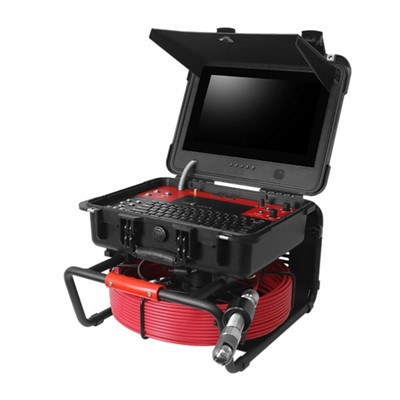
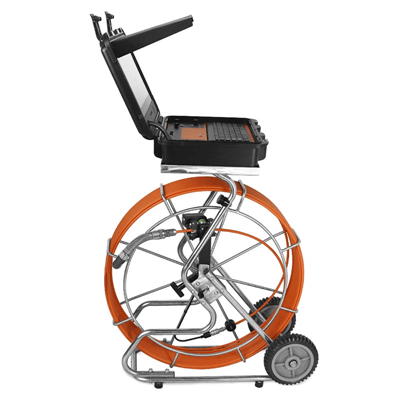
Hey there! As a supplier of Sewer Inspection Cameras, I often get asked about the maximum speed at which these cameras can move through pipes. It's a pretty common question, especially for those in the plumbing and sewer - inspection business, so I thought I'd dive into it in this blog.


First off, let's understand the importance of speed in these operations. When you're using a sewer inspection camera, time is money. The faster the camera can move through the pipes without compromising on the quality of the inspection, the more jobs you can get done in a day. That means higher efficiency and more profit for plumbing companies and contractors.
Now, the maximum speed of a sewer inspection camera moving through pipes isn't a one - size - fits - all answer. It depends on several factors.
One of the biggest factors is the diameter of the pipe. In larger pipes, the camera can generally move faster. This is because there's more space for the camera to navigate without hitting the walls. For example, in pipes with a diameter of 12 inches or more, a well - designed inspection camera might be able to move at speeds of up to 10 feet per minute. In contrast, in smaller pipes, say 2 - 4 inches in diameter, the speed has to be much slower, often around 2 - 3 feet per minute. This is to prevent the camera from getting stuck or causing damage to the pipe walls.
The condition of the pipe also plays a huge part. If the pipe is in good condition, with smooth walls and no major blockages or debris, the camera can move more quickly. However, if there are tree roots protruding into the pipe, or a lot of sediment build - up, the camera has to be moved at a snail's pace. This allows the operator to carefully examine the problem areas and ensure that nothing is missed during the inspection.
The type of camera you're using matters too. We've got some great cameras in our lineup. For instance, the Super Mini Sewer Drain Camera is specially designed for small - diameter pipes. Due to its compact size and advanced maneuverability, it can still move relatively well through tight spaces, although the speed is restricted by the pipe dimensions.
On the other hand, our Self Leveling Sewer Camera is a great option for larger pipes. It has a self - leveling feature that helps it stay stable as it moves through the pipe, which can contribute to a more consistent speed during the inspection.
Another factor is the cable management system. A good cable management system allows the camera to be deployed and retracted smoothly. If the cable gets tangled or has issues feeding through the pipe, it can significantly slow down the inspection process. Our Plumbing Inspection Camera Systems come with high - quality cable management, which helps in maintaining a decent speed during the operation.
The skill of the operator also can't be overlooked. An experienced operator knows how to adjust the speed of the camera based on what they're seeing on the monitor. They can speed up when the pipe is clear and slow down when there's something suspicious. Newer operators may be more cautious, which can result in slower overall inspection speeds.
In some cases, the camera's speed is limited by the data - transfer rate. If the camera is capturing high - definition video and sending it back to the monitor, a slow data - transfer rate can bottleneck the process. You don't want to move the camera too fast if the video feed is lagging, as you might miss important details.
So, to sum it all up, there's no single maximum speed for sewer inspection cameras. It's a complex equation that takes into account the pipe diameter, pipe condition, camera type, cable management, operator skill, and data - transfer rate.
If you're in the market for a sewer inspection camera, it's crucial to consider these factors. You need a camera that can handle the types of pipes you'll be inspecting and one that fits your level of expertise. At our company, we've got a wide range of cameras to suit different needs. Whether you're dealing with small residential pipes or large municipal sewers, we can help you find the right camera.
Interested in checking out our products and finding out which one is best for you? We'd love to have a chat with you. Feel free to reach out and start a conversation about your requirements. A great sewer inspection camera can make a huge difference in your business, so don't hesitate to get in touch.
References:
- Professional plumbing inspection handbooks.
- In - house testing data from our product development.
- Industry reports on sewer inspection technology.