What is the minimum pipe size for a sewer camera system to work effectively?
As a supplier of Sewer Camera Systems, I've been asked numerous times about the minimum pipe size required for these systems to operate effectively. This is a crucial question for anyone involved in plumbing inspections, whether it's a professional plumber, a building inspector, or a property owner looking to assess the condition of their sewer lines.
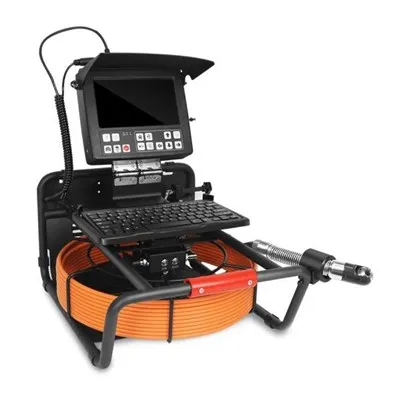
To understand the minimum pipe size, we first need to delve into the components of a sewer camera system. A typical sewer camera system consists of a camera head, a cable, and a monitor. The camera head is the most critical part as it needs to navigate through the pipes to capture clear images and videos of the interior.
The size of the camera head plays a significant role in determining the minimum pipe size. Camera heads come in various diameters, ranging from as small as 1/4 inch to larger sizes. Smaller camera heads are designed for use in tight spaces and smaller pipes, while larger ones are more suitable for bigger pipes.
For residential plumbing systems, the most common pipe sizes range from 1.5 inches to 4 inches. In these systems, a sewer camera with a camera head diameter of around 1/2 inch to 3/4 inch can usually work effectively. These smaller camera heads can easily maneuver through the bends and turns in the pipes, providing clear visuals of the pipe interior.
When it comes to commercial or industrial plumbing systems, the pipe sizes can be much larger, often ranging from 6 inches to 12 inches or more. In these cases, a larger camera head may be required. A camera head with a diameter of 1 inch or more can provide better stability and a wider field of view, allowing for a more comprehensive inspection of the larger pipes.
However, the minimum pipe size also depends on other factors besides the camera head diameter. The flexibility of the cable is another important consideration. A more flexible cable can help the camera head navigate through pipes with multiple bends and curves, even in smaller pipes. Some sewer camera systems are equipped with highly flexible cables that can be used in pipes as small as 1.5 inches.
The lighting system of the camera head is also crucial. Adequate lighting is necessary to capture clear images and videos, especially in dark and dirty sewer pipes. A camera head with powerful LED lights can illuminate the pipe interior, even in smaller pipes where the light may be more restricted.
Now, let's talk about the importance of using the right sewer camera system for the pipe size. Using a camera head that is too large for the pipe can cause problems. It may get stuck in the pipe, damaging the camera and the pipe itself. On the other hand, using a camera head that is too small may not provide a clear enough view of the pipe interior, especially in larger pipes where the camera may not be able to cover the entire cross-section.


To ensure an effective inspection, it's essential to choose a sewer camera system that is appropriate for the pipe size. Our company offers a wide range of sewer camera systems, including Plumbing Video Camera Inspection, Plumbing Pipe Inspection Camera, and Sewer Inspection Cameras. These systems are designed to meet the needs of different pipe sizes and inspection requirements.
For smaller pipes, our compact and flexible camera systems with small camera heads are ideal. They can easily access tight spaces and provide high-quality images and videos. For larger pipes, our heavy-duty camera systems with larger camera heads and powerful lighting are more suitable.
In addition to the pipe size, it's also important to consider the condition of the pipes. If the pipes are clogged or have a lot of debris, it may be more difficult for the camera head to move through the pipes. In these cases, it may be necessary to clean the pipes before conducting the inspection.
Another factor to consider is the length of the pipes. Longer pipes may require a camera system with a longer cable. Our sewer camera systems come with cables of different lengths, allowing for inspections of pipes of various lengths.
To sum up, the minimum pipe size for a sewer camera system to work effectively depends on several factors, including the camera head diameter, cable flexibility, lighting system, pipe condition, and pipe length. By choosing the right sewer camera system for the specific pipe size and inspection requirements, you can ensure a successful and accurate inspection.
If you're in the market for a sewer camera system, whether for residential, commercial, or industrial use, we're here to help. Our team of experts can assist you in selecting the most suitable system for your needs. We offer high-quality products, competitive prices, and excellent customer service. Contact us today to discuss your requirements and start your journey towards a more efficient and accurate plumbing inspection.
References
- "Plumbing Pipe Inspection Handbook" - A comprehensive guide on plumbing inspections and the use of camera systems.
- Industry standards and guidelines for sewer camera inspections.
- Manufacturer specifications and documentation for sewer camera systems.