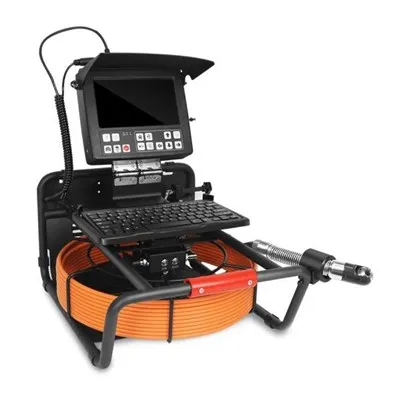
Hey there! As a supplier of pushrod cameras, I often get asked about the response time of these nifty devices. So, I thought I'd sit down and write a blog post to give you all the lowdown on what response time means in the context of pushrod cameras, why it matters, and how it can affect your work.
First off, let's talk about what a pushrod camera is. If you're not familiar, a pushrod camera is a type of inspection camera that's designed to be inserted into pipes, ducts, and other small spaces to provide visual inspection. They're commonly used in plumbing, sewer, and industrial applications to detect blockages, leaks, and other issues without having to dig up or disassemble the pipes.
Now, when we talk about the response time of a pushrod camera, we're referring to how quickly the camera can capture and transmit an image or video of what it's seeing. This is important because in many inspection scenarios, time is of the essence. You want to be able to get a clear picture of the problem as quickly as possible so you can make informed decisions about how to proceed.
There are a few factors that can affect the response time of a pushrod camera. One of the biggest factors is the quality of the camera itself. Higher-end cameras with better sensors and processing capabilities will generally have a faster response time than lower-quality cameras. This is because they're able to capture and process images more quickly, which means you'll see the results on your monitor or device faster.
Another factor that can affect response time is the length of the pushrod. The longer the pushrod, the more time it takes for the signal to travel from the camera at the end of the rod to the monitor or device you're using to view the images. This is because the signal has to travel through the cable inside the pushrod, and the longer the cable, the more resistance there is, which can slow down the signal.
The type of connection between the camera and the monitor or device can also affect response time. Some pushrod cameras use wired connections, while others use wireless connections. Wired connections are generally faster and more reliable than wireless connections, but they can be more cumbersome to set up and use. Wireless connections, on the other hand, offer more flexibility and mobility, but they can be subject to interference and signal loss, which can slow down the response time.
So, why does response time matter? Well, as I mentioned earlier, in many inspection scenarios, time is of the essence. If you're trying to diagnose a problem in a sewer line, for example, you don't want to have to wait around for the camera to capture and transmit an image. You want to be able to see what's going on right away so you can make a decision about how to proceed. A fast response time can also help you avoid costly delays and downtime, which can be especially important in industrial settings.
In addition to saving time, a fast response time can also improve the accuracy of your inspections. When you're able to see the images and videos in real-time, you can get a better sense of the condition of the pipes or other structures you're inspecting. This can help you identify potential problems before they become major issues, which can save you time and money in the long run.
Now, let's take a look at some of the pushrod cameras we offer and how their response times stack up. One of our most popular models is the 33mm Pan Tilt Portable Pipe Sewer Drain Inspection Camera 100 ft. This camera features a high-quality sensor and advanced processing capabilities, which allow it to capture and transmit images and videos quickly and accurately. It also has a pan and tilt function, which gives you greater flexibility and control when inspecting pipes and other small spaces.
Another great option is the Pipe Weld Inspection Camera. This camera is specifically designed for inspecting welds in pipes and other structures. It has a fast response time and a high-resolution image sensor, which allows you to see even the smallest details of the weld. It also has a built-in LED light, which provides bright, even illumination in dark or hard-to-reach areas.
Finally, we have the 33mm FHD 120m Pan Tilt Rotation Sewer Push Rod CCTV Camera with Manual Focus Function. This camera is a top-of-the-line model that offers the latest in pushrod camera technology. It has a fast response time, a high-resolution FHD image sensor, and a manual focus function, which allows you to adjust the focus of the camera for optimal clarity. It also has a pan, tilt, and rotation function, which gives you 360-degree coverage of the area you're inspecting.
In conclusion, the response time of a pushrod camera is an important factor to consider when choosing a camera for your inspection needs. A fast response time can save you time, improve the accuracy of your inspections, and help you make informed decisions about how to proceed. At our company, we offer a wide range of pushrod cameras with different response times and features to meet the needs of our customers. If you're interested in learning more about our products or have any questions, please don't hesitate to contact us. We'd be happy to help you find the right pushrod camera for your needs and answer any questions you may have.
References


- General knowledge about pushrod cameras and their technical aspects from industry experience.