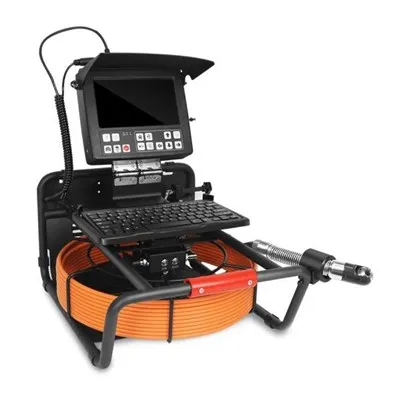
What is the sensitivity of a borescope camera's sensor?
As a long - time supplier of borescope cameras, I've had numerous customers ask about the sensitivity of a borescope camera's sensor. It's a crucial factor that significantly impacts the performance and usability of these specialized cameras. In this blog, I'll delve into what sensor sensitivity means for borescope cameras, its importance, and how it can affect your inspection tasks.
Understanding Sensor Sensitivity
Sensor sensitivity in a borescope camera refers to the ability of the camera's image sensor to detect and convert light into an electrical signal. It is typically measured in units like ISO (International Organization for Standardization) in photography. A higher ISO value indicates greater sensitivity. For borescope cameras, which are often used in dark or confined spaces, high sensor sensitivity is vital.
In a nutshell, when a borescope camera has a sensitive sensor, it can capture clear and detailed images even in low - light conditions. This is because the sensor can amplify the weak light signals it receives, making it possible to see objects and details that would otherwise be invisible.
Why Sensor Sensitivity Matters in Borescope Cameras
Borescope cameras are used in a wide range of applications, including Endoscope Pipe Inspection Camera, engine inspections, and industrial equipment examinations. These environments are often dark, and getting sufficient light to the inspection area can be challenging.
For instance, in pipe inspections, the interior of pipes may be pitch - black. A borescope camera with a high - sensitivity sensor can pick up the minimal light that penetrates the pipe and produce a clear image of the pipe's condition, such as cracks, corrosion, or blockages. Without adequate sensitivity, the images may be too dark and grainy, making it difficult or impossible to accurately assess the situation.
In industrial settings, Borescope Camera Inspection is often carried out inside machinery. These areas may have limited access for lighting equipment. A sensitive sensor allows the camera to capture fine details of mechanical components, helping technicians identify wear and tear, misalignments, or other potential issues.


Factors Affecting Sensor Sensitivity
There are several factors that can influence the sensitivity of a borescope camera's sensor:
- Sensor Size: Larger sensors generally have higher sensitivity. This is because they have more surface area to capture light. A larger sensor can collect more photons, which are the particles of light, resulting in a stronger electrical signal and better image quality in low - light conditions.
- Pixel Size: Bigger pixels can also contribute to higher sensitivity. Each pixel on the sensor is responsible for capturing light. Larger pixels can hold more charge, which means they can detect weaker light signals more effectively.
- Sensor Technology: Different sensor technologies have varying levels of sensitivity. For example, CMOS (Complementary Metal - Oxide - Semiconductor) sensors are commonly used in borescope cameras. Modern CMOS sensors have advanced features that can enhance sensitivity, such as back - illuminated designs that allow more light to reach the photo - sensitive areas of the pixels.
Measuring and Comparing Sensor Sensitivity
When comparing different borescope cameras, the ISO rating is a useful metric for assessing sensor sensitivity. However, it's important to note that the ISO rating alone may not tell the whole story. Some manufacturers may inflate the ISO values, so it's also crucial to look at real - world performance.
One way to evaluate sensitivity is to look at the signal - to - noise ratio (SNR). A higher SNR means that the camera can distinguish the useful signal (the image) from the background noise more effectively. In low - light conditions, a camera with a high SNR will produce a cleaner, less grainy image.
Another method is to conduct practical tests. Take the borescope cameras into a low - light environment similar to the intended application and compare the quality of the images they produce. This hands - on approach can give you a better understanding of how the cameras will perform in your specific inspection tasks.
Impact of Sensor Sensitivity on Image Quality
The sensitivity of the sensor has a direct impact on image quality. In low - light situations, a camera with low sensitivity may produce images that are dark, noisy, and lack detail. The noise in the image can make it difficult to distinguish between real features and artifacts, leading to inaccurate inspections.
On the other hand, a borescope camera with high sensitivity can capture sharp, clear images with good contrast. The details of the inspected object, such as small defects or markings, can be easily identified. This is especially important in industries where precision and accuracy are critical, such as aerospace and medical device manufacturing, where Industrial Endoscope Camera are often used.
Choosing the Right Borescope Camera Based on Sensor Sensitivity
When selecting a borescope camera, you need to consider the specific requirements of your inspection tasks. If you'll be working in extremely dark environments, such as deep underground pipes or inside sealed industrial containers, you'll need a camera with a very high - sensitivity sensor.
However, if your inspections are carried out in relatively well - lit areas, you may not need the highest - sensitivity camera. In such cases, you can focus on other features, such as camera resolution, flexibility of the probe, or the availability of additional accessories.
Conclusion
The sensitivity of a borescope camera's sensor is a key factor that can make or break the success of your inspection tasks. A high - sensitivity sensor allows for clear and detailed imaging in low - light conditions, which is common in many borescope applications. As a supplier of borescope cameras, I understand the importance of providing products with the right level of sensor sensitivity to meet our customers' needs.
If you're in the market for a borescope camera and need help choosing the right one based on sensor sensitivity and other features, I encourage you to reach out to me. I'm more than happy to assist you in finding the perfect solution for your inspection requirements. Whether you're involved in pipe inspections, industrial equipment examinations, or other applications, the right borescope camera with appropriate sensor sensitivity can make your inspection processes more efficient and accurate.
References
- "Digital Image Sensors: Fundamentals, Types, and Applications" by Janesick, James R.
- "CMOS Image Sensors: From Phototransduction to Image Presentation" by Fossum, Eric R.