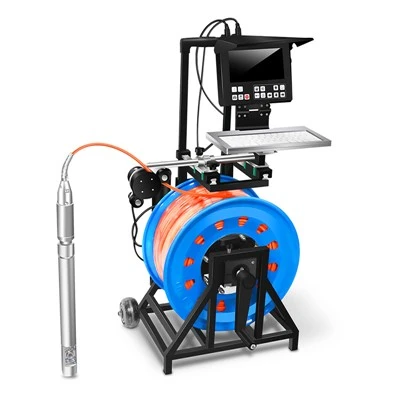
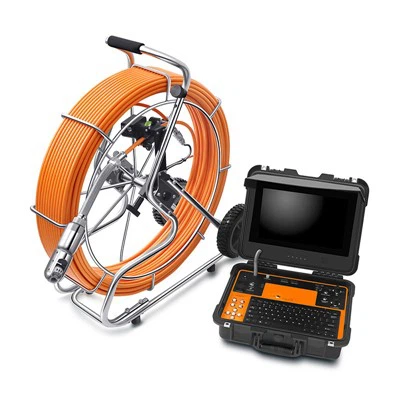
In the realm of pipeline inspection and maintenance, the ability to detect leaks accurately is of utmost importance. As a Pipe Crawler supplier, I have witnessed firsthand the critical role these devices play in ensuring the integrity of pipelines. In this blog, I will delve into the concept of the sensitivity of a Pipe Crawler in detecting leaks, exploring its significance, the factors that influence it, and how it can be optimized for effective pipeline monitoring.
Understanding the Significance of Leak Detection Sensitivity
Leakage in pipelines can lead to a multitude of problems, including environmental contamination, loss of valuable resources, and potential safety hazards. Early detection of leaks is crucial to minimize these risks and prevent costly repairs. A Pipe Crawler with high sensitivity can detect even the smallest leaks, allowing for timely intervention and mitigation.
The sensitivity of a Pipe Crawler refers to its ability to detect and quantify the presence of leaks in a pipeline. It is typically measured in terms of the minimum detectable leak rate, which is the smallest amount of fluid that the crawler can reliably detect. A higher sensitivity means that the crawler can detect smaller leaks, providing more comprehensive and accurate information about the condition of the pipeline.
Factors Influencing the Sensitivity of a Pipe Crawler
Several factors can influence the sensitivity of a Pipe Crawler in detecting leaks. Understanding these factors is essential for optimizing the performance of the crawler and ensuring accurate leak detection.
Sensor Technology
The type of sensors used in the Pipe Crawler plays a crucial role in determining its sensitivity. Different sensor technologies have varying levels of sensitivity and are suitable for different types of leaks. For example, acoustic sensors can detect the sound waves generated by a leak, while pressure sensors can measure changes in pressure caused by a leak. Optical sensors can detect changes in the appearance of the pipeline, such as the presence of moisture or corrosion.
Advanced sensor technologies, such as fiber optic sensors and infrared cameras, offer higher sensitivity and can detect leaks at an earlier stage. These sensors can also provide more detailed information about the location and size of the leak, allowing for more targeted repairs.
Pipeline Conditions
The condition of the pipeline itself can also affect the sensitivity of the Pipe Crawler. Factors such as the diameter, material, and age of the pipeline can influence the propagation of the leak signal and the ability of the sensors to detect it. For example, a pipeline with a rough interior surface may cause the leak signal to scatter, making it more difficult to detect.
In addition, the presence of other substances in the pipeline, such as sediment or debris, can also interfere with the leak detection process. These substances can absorb or reflect the leak signal, reducing the sensitivity of the sensors.
Environmental Conditions
The environmental conditions in which the Pipe Crawler operates can also have an impact on its sensitivity. Factors such as temperature, humidity, and pressure can affect the performance of the sensors and the propagation of the leak signal. For example, high temperatures can cause the sensors to malfunction, while high humidity can interfere with the electrical signals.
In addition, the presence of external noise sources, such as traffic or machinery, can also affect the sensitivity of the sensors. These noise sources can mask the leak signal, making it more difficult to detect.
Crawler Design and Configuration
The design and configuration of the Pipe Crawler can also influence its sensitivity. Factors such as the size, shape, and weight of the crawler can affect its mobility and the ability of the sensors to access different parts of the pipeline. For example, a crawler with a small diameter may be able to access narrow pipelines, while a crawler with a high weight may be more stable and less likely to be affected by external forces.
In addition, the placement and orientation of the sensors on the crawler can also affect their sensitivity. The sensors should be placed in a position where they can detect the leak signal most effectively, and they should be oriented in a way that maximizes their field of view.
Optimizing the Sensitivity of a Pipe Crawler
To optimize the sensitivity of a Pipe Crawler in detecting leaks, several strategies can be employed. These strategies involve selecting the appropriate sensor technology, considering the pipeline conditions and environmental factors, and optimizing the design and configuration of the crawler.


Selecting the Appropriate Sensor Technology
The choice of sensor technology depends on the type of leaks that are expected to occur in the pipeline and the specific requirements of the application. For example, if the pipeline is carrying a liquid, acoustic sensors or pressure sensors may be more suitable, while if the pipeline is carrying a gas, optical sensors or infrared cameras may be more effective.
In addition, it is important to consider the sensitivity and accuracy of the sensors, as well as their reliability and durability. Advanced sensor technologies may offer higher sensitivity and accuracy, but they may also be more expensive and require more maintenance.
Considering the Pipeline Conditions and Environmental Factors
Before deploying a Pipe Crawler, it is important to assess the pipeline conditions and environmental factors that may affect its sensitivity. This includes conducting a thorough inspection of the pipeline to identify any potential obstacles or sources of interference, as well as monitoring the environmental conditions during the inspection.
Based on this assessment, appropriate measures can be taken to optimize the performance of the crawler. For example, if the pipeline has a rough interior surface, a smoothing agent may be applied to improve the propagation of the leak signal. If the environmental conditions are harsh, the crawler may be equipped with protective measures, such as a waterproof casing or a temperature-controlled enclosure.
Optimizing the Design and Configuration of the Crawler
The design and configuration of the Pipe Crawler should be optimized to maximize its sensitivity and mobility. This includes selecting the appropriate size, shape, and weight of the crawler, as well as the placement and orientation of the sensors.
In addition, the crawler should be equipped with advanced features, such as real-time data processing and wireless communication, to improve its performance and efficiency. These features allow the operator to monitor the leak detection process in real-time and make informed decisions based on the data collected.
Conclusion
The sensitivity of a Pipe Crawler in detecting leaks is a critical factor in ensuring the integrity of pipelines. By understanding the factors that influence the sensitivity and employing appropriate strategies to optimize it, we can improve the accuracy and reliability of leak detection and minimize the risks associated with pipeline leaks.
As a Pipe Crawler supplier, we are committed to providing our customers with high-quality products and solutions that meet their specific needs. Our Pipe Crawlers are equipped with advanced sensor technologies and are designed to operate in a variety of pipeline conditions and environmental factors. We also offer comprehensive training and support services to ensure that our customers can use our products effectively and safely.
If you are interested in learning more about our Pipe Crawlers or would like to discuss your specific requirements, please [Contact Us]. We look forward to hearing from you and helping you find the right solution for your pipeline inspection and maintenance needs.
References
- [Author's Last Name], [Author's First Name]. [Title of Book]. [Publisher], [Year of Publication].
- [Author's Last Name], [Author's First Name]. "[Title of Article]." [Name of Journal], Vol. [Volume Number], No. [Issue Number], [Year of Publication], pp. [Page Numbers].
- [Author's Last Name], [Author's First Name]. "[Title of Website]." [Website URL], [Date of Access].