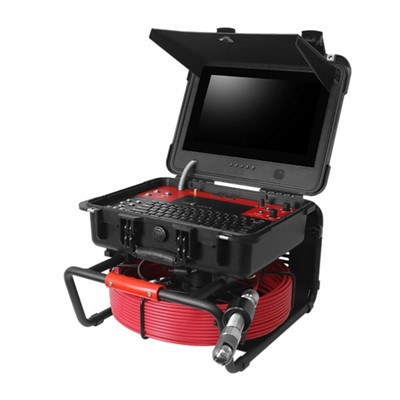
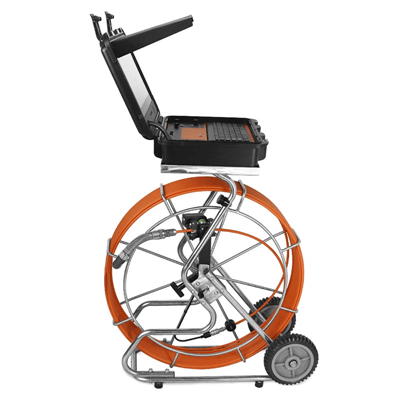
As a supplier of CCTV pipe crawler robots, I often encounter inquiries from customers about the signal - strength of the remote control for these robots. Understanding the signal - strength is crucial as it directly impacts the performance and usability of the CCTV pipe crawler robot in various applications.
Importance of Signal - Strength in CCTV Pipe Crawler Robots
CCTV pipe crawler robots are designed to navigate through pipes, whether they are sewer lines, stormwater drains, or industrial pipelines. These robots are equipped with cameras that transmit real - time video footage to the operator via a remote control. A strong and stable signal is essential for several reasons.
Firstly, it ensures smooth and uninterrupted video transmission. In a pipe inspection scenario, clear video footage is vital for detecting cracks, blockages, and other defects. If the signal is weak, the video may freeze, pixelate, or even be lost completely, making it difficult or impossible for the operator to make accurate assessments.
Secondly, a reliable signal is necessary for controlling the robot's movement. The operator needs to be able to steer the robot forward, backward, turn, and adjust the camera angle precisely. A weak signal can lead to delayed or inaccurate control responses, which can cause the robot to get stuck or collide with the pipe walls, potentially damaging the equipment.
Factors Affecting Signal - Strength
Several factors can affect the signal - strength of a CCTV pipe crawler robot's remote control.
Pipe Material
The material of the pipe plays a significant role. Metal pipes, for example, can act as a shield, blocking or attenuating the radio signals used for communication between the robot and the remote control. Concrete pipes may also absorb or scatter the signals, reducing their strength. On the other hand, plastic pipes generally have less impact on signal transmission, allowing the signals to travel more freely.
Pipe Length and Bends
As the robot moves deeper into the pipe, the signal has to travel a longer distance, which naturally weakens it. Additionally, each bend in the pipe can cause the signal to be reflected or absorbed, further reducing its strength. In long and complex pipe systems with multiple bends, maintaining a strong signal becomes a challenge.
Environmental Interference
External electromagnetic interference can also affect the signal - strength. In urban areas, there may be a high density of electronic devices, such as cell phones, Wi - Fi routers, and radio transmitters, which can generate electromagnetic noise. This noise can interfere with the signals of the CCTV pipe crawler robot, causing signal degradation.
Measuring Signal - Strength
To determine the signal - strength of a CCTV pipe crawler robot's remote control, several methods can be used.
RSSI (Received Signal Strength Indication)
RSSI is a common method used to measure the power level of a received radio signal. Most remote control systems for CCTV pipe crawler robots are equipped with RSSI indicators. These indicators provide a numerical value or a visual representation of the signal strength, allowing the operator to monitor the signal in real - time.
Field Testing
Field testing is another effective way to measure signal - strength. By operating the robot in different types of pipes and under various environmental conditions, the supplier can collect data on the signal performance. This data can then be used to optimize the design of the remote control system and to provide customers with accurate information about the expected signal - strength in different scenarios.


Improving Signal - Strength
As a supplier, we are constantly looking for ways to improve the signal - strength of our CCTV pipe crawler robots' remote controls.
Antenna Design
The design of the antenna is crucial for signal transmission. We use high - gain antennas that are specifically designed to enhance the signal strength and range. These antennas are carefully positioned on the robot and the remote control to maximize the signal reception and transmission.
Signal Amplification
Signal amplifiers can be used to boost the strength of the signals. These amplifiers are installed in the robot and the remote control to increase the power of the transmitted and received signals. By using signal amplifiers, we can extend the range of the remote control and improve the signal quality in challenging environments.
Frequency Selection
Selecting the right frequency for signal transmission is also important. Different frequencies have different propagation characteristics, and some frequencies are more suitable for pipe environments than others. We conduct extensive research and testing to determine the optimal frequency for our CCTV pipe crawler robots, ensuring reliable signal communication.
Applications and Signal - Strength Requirements
The signal - strength requirements vary depending on the application of the CCTV pipe crawler robot.
Sewer Inspection
In sewer inspection, the robot may need to travel long distances through complex pipe networks. A strong and stable signal is essential to ensure that the operator can control the robot accurately and receive clear video footage. For sewer inspection applications, we recommend our Crawler Drain Camera, which is designed to provide reliable signal communication even in challenging sewer environments.
Stormwater Drain Inspection
Stormwater drains are often larger and more open than sewer pipes, but they may also have a lot of debris and water. The signal - strength requirements for stormwater drain inspection are similar to those for sewer inspection, but the robot may need to be more rugged to withstand the harsh conditions. Our CCTV Stormwater solution is specifically designed for stormwater drain inspection, with a focus on signal reliability and durability.
Industrial Pipeline Inspection
Industrial pipelines can have a wide range of diameters and materials, and they may be located in harsh industrial environments. The signal - strength requirements for industrial pipeline inspection depend on the specific application. For example, in a chemical plant, the robot may need to operate in an environment with high levels of electromagnetic interference. Our CCTV Crawler Camera is suitable for industrial pipeline inspection, offering customizable features to meet the specific signal - strength requirements of different industrial applications.
Conclusion
The signal - strength of a CCTV pipe crawler robot's remote control is a critical factor that affects the performance and usability of the robot. As a supplier, we understand the importance of providing reliable signal communication in various pipe environments. By using advanced technologies such as high - gain antennas, signal amplifiers, and optimal frequency selection, we are able to improve the signal - strength and range of our CCTV pipe crawler robots.
If you are interested in our CCTV pipe crawler robots and would like to learn more about the signal - strength and other features, please feel free to contact us for a detailed discussion. We are committed to providing high - quality products and excellent customer service to meet your pipe inspection needs.
References
- "Principles of Wireless Communication" by Andreas F. Molisch
- "Electromagnetic Wave Propagation, Radiation, and Scattering" by Akira Ishimaru