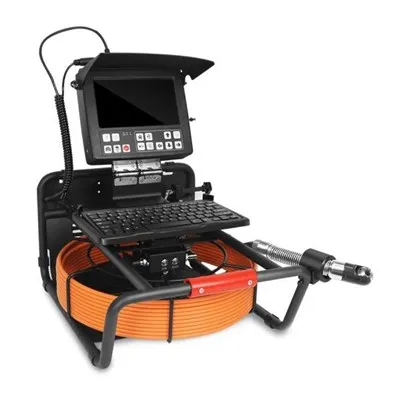
As a well - established supplier of 100m Water Well Cameras, I've witnessed the growing demand for high - quality downhole inspection equipment. In this blog, I'll delve into the signal transmission methods of the 100m Water Well Camera, which are crucial for ensuring smooth and reliable data transfer from the depths of the well to the surface.
1. Wired Signal Transmission
The most common and reliable method for signal transmission in 100m Water Well Cameras is through a wired connection. This involves a multi - core cable that runs from the camera at the bottom of the well to the surface control unit.
How it Works
The cable serves multiple purposes. Firstly, it provides power to the camera. The camera requires a stable power supply to operate its lighting system, image sensor, and other electronics. The cable also transmits the video signal from the camera back to the surface. The video signal is typically an analog or digital signal, depending on the type of camera.
Analog signals are the traditional form of signal transmission. They represent the video image as a continuous electrical waveform. While analog signals can provide a decent image quality, they are more susceptible to interference, especially over long distances like 100m. Digital signals, on the other hand, convert the video image into a series of binary digits (0s and 1s). Digital signals offer several advantages, such as better image quality, less susceptibility to interference, and the ability to compress the data for more efficient transmission.
Advantages of Wired Transmission
- Reliability: Wired connections are generally very reliable. As long as the cable is properly installed and maintained, there is a low risk of signal loss. This is crucial for applications where continuous monitoring is required.
- Power Supply: The same cable that transmits the signal can also provide power to the camera, eliminating the need for separate power sources at the bottom of the well.
- High - Quality Image: Digital wired transmission can ensure high - quality image and video data transfer, allowing for clear inspection of the wellbore.
Disadvantages of Wired Transmission
- Installation Complexity: Installing a 100m cable can be a challenging task. It requires careful handling to avoid damage to the cable, and proper alignment to ensure smooth deployment and retrieval of the camera.
- Limited Mobility: Once the cable is installed, the camera's movement is restricted by the length of the cable. This can be a limitation in some applications where more flexibility is needed.
2. Wireless Signal Transmission
In recent years, wireless signal transmission has emerged as an alternative for 100m Water Well Cameras. Wireless technology offers greater flexibility and ease of use in certain situations.
How it Works
Wireless transmission in well cameras typically uses radio frequency (RF) or Wi - Fi technology. The camera at the bottom of the well is equipped with a wireless transmitter that sends the video signal to a receiver at the surface. The receiver then decodes the signal and displays the video on a monitor.
RF technology operates on specific frequency bands. It can penetrate through the wellbore and transmit the signal over a relatively long distance. Wi - Fi technology, on the other hand, is more commonly used for shorter - range applications. It offers high - speed data transfer and can be easily integrated with other devices, such as laptops or tablets.
Advantages of Wireless Transmission
- Flexibility: Wireless cameras can be easily moved and re - positioned without the need to deal with a long cable. This makes them ideal for applications where quick inspections are required in different locations.
- Ease of Installation: Installing a wireless camera is generally quicker and easier than a wired camera. There is no need to lay a long cable, which can save time and labor costs.
Disadvantages of Wireless Transmission
- Signal Interference: Wireless signals can be easily affected by interference from other electronic devices, the wellbore environment, or natural phenomena. This can result in a degraded image quality or even signal loss.
- Limited Range: While RF technology can transmit signals over a relatively long distance, the range may still be limited in some wellbore conditions. In addition, the signal strength may weaken as the distance increases, which can affect the image quality.
- Power Consumption: Wireless cameras require a power source, and the wireless transmitter also consumes additional power. This may limit the operating time of the camera, especially in battery - powered models.
3. Signal Enhancement and Data Management
Regardless of the signal transmission method used, signal enhancement and data management are important aspects of ensuring the quality of the video data.
Signal Enhancement
For wired transmission, signal boosters can be installed along the cable to amplify the signal and reduce signal loss. In wireless transmission, directional antennas can be used to improve the signal strength and reduce interference. Additionally, signal processing algorithms can be applied to enhance the image quality, such as noise reduction and contrast adjustment.
Data Management
The video data collected by the well camera needs to be properly managed. This includes storing the data for future reference, analyzing the data to detect any issues in the wellbore, and sharing the data with relevant stakeholders. Many modern well cameras come with software that allows for easy data management, such as video recording, playback, and annotation.
Our Product Offerings
As a leading supplier of 100m Water Well Cameras, we offer a range of high - quality products that utilize the latest signal transmission technologies. Our 45mm Dual View HD 300m to 500m Downhole Deep Well Video Camera System features advanced digital wired transmission for reliable and high - quality video data transfer. It is suitable for deep well inspections up to 500m, providing clear and detailed images of the wellbore.
Our 45mm Waterproof 200m Dual - View Downhole Deep Well Camera with Manual Focus is another excellent option. It offers both wired and wireless transmission options, giving you the flexibility to choose the most suitable method for your application. The manual focus feature allows for precise image adjustment, ensuring clear images even in different wellbore conditions.


We also have the Bore Hole Camera, which is designed for borehole inspections. It uses state - of - the - art signal transmission technology to provide accurate and real - time video data.
Conclusion
The signal transmission method of a 100m Water Well Camera is a critical factor in determining its performance and usability. Wired transmission offers reliability and high - quality image transfer, while wireless transmission provides flexibility and ease of installation. By understanding the advantages and disadvantages of each method, you can choose the most suitable camera for your specific needs.
If you are interested in our 100m Water Well Cameras or have any questions about signal transmission methods, please feel free to contact us for a detailed discussion and procurement negotiation. We are committed to providing you with the best products and services to meet your well inspection requirements.
References
- "Handbook of Downhole Imaging Technology"
- "Wireless Communication Principles and Practice"
- Industry reports on well inspection equipment and technologies