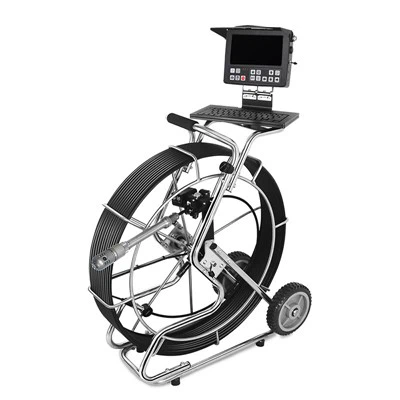
The turning radius of a pipe robot is a critical parameter that significantly impacts its performance and applicability in various pipeline inspection and maintenance tasks. As a leading supplier of pipe robots, we understand the importance of this characteristic and its implications for our customers. In this blog post, we will delve into the concept of the turning radius of a pipe robot, its influencing factors, and its significance in real-world applications.
Understanding the Turning Radius
The turning radius of a pipe robot refers to the minimum radius of curvature that the robot can navigate through without getting stuck or causing damage to the pipeline or itself. It is a measure of the robot's maneuverability within the confined space of a pipe. A smaller turning radius indicates that the robot can navigate through tighter bends and curves, making it more versatile and suitable for complex pipeline systems.
Influencing Factors
Several factors influence the turning radius of a pipe robot. These include:
1. Robot Design
The physical design of the robot plays a crucial role in determining its turning radius. Robots with a more compact and flexible structure tend to have a smaller turning radius. For example, robots with modular or articulated designs can bend and flex more easily, allowing them to navigate through tight spaces. Additionally, the size and shape of the robot's wheels or tracks can also affect its turning ability. Smaller wheels or tracks may provide better maneuverability in tight corners.
2. Pipe Diameter
The diameter of the pipe in which the robot operates is another important factor. Generally, a robot designed for smaller diameter pipes will have a smaller turning radius compared to one designed for larger pipes. This is because the available space for the robot to turn is limited in smaller pipes. However, it's important to note that the relationship between pipe diameter and turning radius is not always linear, as other factors such as the robot's design and the presence of obstacles can also influence the turning ability.
3. Obstacles and Pipeline Conditions
The presence of obstacles, such as debris, sediment, or pipe fittings, can significantly affect the robot's turning radius. Obstacles can restrict the robot's movement and make it more difficult to turn. Additionally, the condition of the pipeline, such as the smoothness of the inner surface and the presence of bends or curves, can also impact the robot's turning ability. Rough or uneven surfaces may cause the robot to slip or lose traction, while sharp bends or curves may require a larger turning radius.
Significance in Real-World Applications
The turning radius of a pipe robot has significant implications for its performance in real-world applications. Here are some key areas where the turning radius is crucial:


1. Pipeline Inspection
In pipeline inspection, the ability to navigate through tight bends and curves is essential for accessing all areas of the pipeline. A pipe robot with a small turning radius can reach areas that may be difficult or impossible to access with a larger robot. This allows for more comprehensive inspections and the detection of potential issues, such as cracks, leaks, or blockages, in hard-to-reach locations.
2. Pipeline Maintenance and Repair
During pipeline maintenance and repair operations, the turning radius of the robot can determine its effectiveness in performing tasks such as cleaning, lining, or welding. A robot with a small turning radius can maneuver around obstacles and reach the required repair locations more easily, reducing the time and effort required for maintenance and repair work.
3. Sewer and Drainage Systems
In sewer and drainage systems, pipes often have complex layouts with numerous bends and curves. A pipe robot with a small turning radius is essential for navigating through these systems and conducting inspections and maintenance. For example, our Storm Sewer Camera is designed with a small turning radius to ensure efficient operation in sewer and drainage pipes.
Our Pipe Robots and Their Turning Radii
As a supplier of Pipe Robot and Pipe Crawler solutions, we offer a range of robots with different turning radii to meet the diverse needs of our customers. Our robots are designed with advanced technology and innovative features to ensure optimal maneuverability and performance in various pipeline environments.
For example, our compact pipe robots are specifically designed for small diameter pipes and have a very small turning radius, allowing them to navigate through tight spaces with ease. On the other hand, our larger robots are suitable for larger diameter pipes and offer a balance between turning ability and payload capacity.
Conclusion
The turning radius of a pipe robot is a critical parameter that determines its maneuverability and applicability in pipeline inspection, maintenance, and repair tasks. By understanding the factors that influence the turning radius and choosing the right robot for the specific pipeline conditions, customers can ensure efficient and effective operation of their pipe inspection and maintenance systems.
If you are interested in learning more about our pipe robots and their turning radii, or if you have specific requirements for your pipeline inspection or maintenance project, we encourage you to contact us. Our team of experts will be happy to assist you in selecting the right robot for your needs and provide you with detailed information and support.
References
- Smith, J. (2020). Pipe Robot Technology: A Review. Journal of Pipeline Engineering, 15(2), 123-135.
- Johnson, A. (2019). Maneuverability Analysis of Pipe Crawlers. Proceedings of the International Conference on Robotics and Automation, 456-461.
- Brown, C. (2018). Influence of Pipe Diameter on the Turning Radius of Pipe Robots. Pipeline Inspection and Maintenance Journal, 10(3), 78-85.