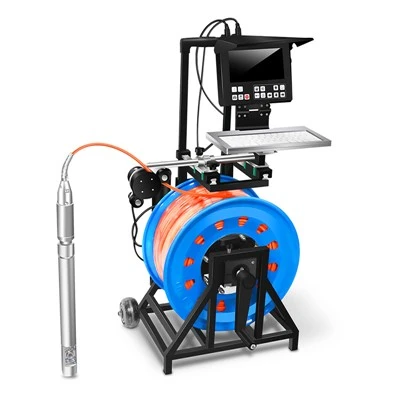
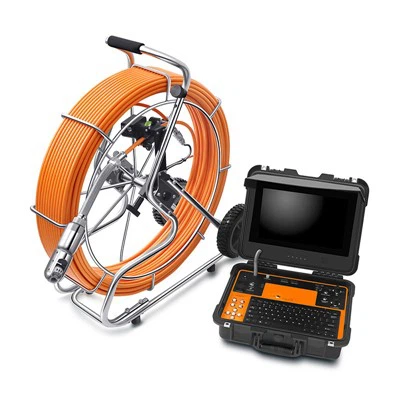
Hey there! As a supplier of the 100m Water Well Camera, I often get asked a bunch of questions from customers. One question that pops up quite a bit is, "Can the 100m Water Well Camera be used in wells with strong water currents?" Well, let's dig into this topic and find out.
First off, let's talk a bit about what the 100m Water Well Camera is all about. It's a pretty nifty piece of equipment designed to give you a clear view of what's going on down in the well. Whether you're checking for pipe damage, sediment buildup, or just want to see the overall condition of the well, this camera can do the job. You can check out more details about similar products like the Underwater Borehole Inspection Camera, Down Hole Camera, and Water Well Inspection Camera on our website.
Now, back to the main question. Using the 100m Water Well Camera in wells with strong water currents is definitely a bit of a challenge, but it's not impossible. There are a few factors we need to consider.
Camera Design and Build
The design and build of the camera play a huge role in its ability to work in strong water currents. Our 100m Water Well Camera is built tough. It's made with high - quality materials that can withstand the pressure and force of the water. The housing is sturdy and sealed to prevent water from getting in and damaging the internal components.


However, the strong water flow can still cause some issues. For example, it might push the camera around, making it difficult to get a stable image. To counter this, we've designed the camera with a streamlined shape. This helps it cut through the water more easily and reduces the impact of the current on its movement.
Image Quality
One of the most important things when using a water well camera is getting a clear image. In wells with strong water currents, the water can become turbulent, causing debris to be stirred up. This debris can float in front of the camera lens and blur the image.
Our camera is equipped with advanced imaging technology. It has a high - resolution lens and a powerful light source. The light helps to illuminate the area around the camera, even in murky water. And the high - resolution lens can capture sharp images, despite the presence of some debris. But if the water is really full of sediment and the current is extremely strong, the image quality might still be affected to some extent.
Cable and Deployment
The cable that connects the camera to the surface is also crucial. In strong water currents, the cable can get pulled and twisted. Our 100m cable is made of durable materials that can handle a fair amount of stress. It's also designed to be flexible enough to follow the movement of the camera without breaking.
When deploying the camera in a well with a strong current, we need to be extra careful. We usually recommend using a slow and steady deployment method. This gives the camera time to adjust to the water flow and helps to keep the cable from getting tangled.
Real - World Applications
In real - world scenarios, there have been cases where our 100m Water Well Camera has been successfully used in wells with strong water currents. For example, in some areas with natural springs, the water in the wells can flow quite fast. Our customers have used the camera to inspect the wells and were able to get useful information about the well's condition.
However, it's important to note that each well is different. The strength of the water current, the amount of debris in the water, and the depth of the well can all affect the performance of the camera. In some cases, additional equipment might be needed to improve the results. For instance, a stabilizer can be attached to the camera to keep it more steady in the water.
Tips for Using the Camera in Strong Currents
If you're planning to use the 100m Water Well Camera in a well with strong water currents, here are some tips:
- Pre - inspection: Before lowering the camera, try to get an idea of the water flow and the amount of debris in the well. You can do this by using a simple water flow meter or by taking a sample of the water.
- Slow deployment: As mentioned earlier, lower the camera slowly. This will help you avoid any sudden movements that could cause the camera to get damaged or the cable to get tangled.
- Adjust the settings: You might need to adjust the camera settings, such as the brightness and contrast, to get a better image in the turbulent water.
- Use a stabilizer: If possible, attach a stabilizer to the camera. This can help keep it in place and reduce the impact of the water current on its movement.
Conclusion
So, can the 100m Water Well Camera be used in wells with strong water currents? The answer is yes, but with some limitations. Our camera is designed to handle challenging conditions, but the performance can be affected by the strength of the current and the amount of debris in the water.
If you're facing a well with a strong water current and need to inspect it, our 100m Water Well Camera could be a great option. But it's always a good idea to talk to our team before making a decision. We can provide you with more detailed information based on your specific situation.
If you're interested in purchasing our 100m Water Well Camera or have any questions about its use in wells with strong water currents, don't hesitate to reach out. We're here to help you make the right choice for your well inspection needs.
References
- General knowledge about water well camera technology and well inspection.
- Customer feedback and case studies from real - world applications of the 100m Water Well Camera.