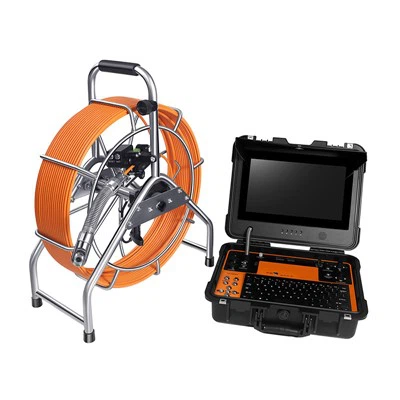
As a provider of the Deep Well Camera System, I'm often approached with diverse inquiries regarding the applications and limitations of our technology. One question that has been cropping up more frequently lately is, "Can the Deep Well Camera System be used in frozen wells?" This blog post aims to delve into this topic, exploring the feasibility, challenges, and potential solutions of using our camera systems in such extreme conditions.


Understanding the Deep Well Camera System
Before we address the question at hand, it's essential to understand what the Deep Well Camera System entails. Our systems are designed to provide high - resolution visual inspection of deep wells, boreholes, and underwater environments. The cameras are engineered to withstand high pressures, variable temperatures, and harsh chemical conditions typically found in wells. They come with features like pan - tilt functionality, high - quality lighting, and real - time video transmission, making them ideal for a wide range of applications, including geological surveys, well maintenance, and environmental monitoring.
Our product range includes various models, such as the Bore Hole Camera, Underwater Borehole Inspection Camera, 33mm Pan Tilt Portable AHD Underwater Borehole Inspection Camera 50Mtr, Borehole Video Camera, and 50mm AHD 360° View Pan Tilt Water Well Borehole Camera Inspection 100m - 200m. Each model is tailored to different needs, depths, and inspection requirements.
The Challenges of Operating in Frozen Wells
Operating a Deep Well Camera System in frozen wells presents a unique set of challenges. Temperature is the most significant obstacle. Frozen wells can have extremely low temperatures, often well below freezing point. These frigid conditions can have several adverse effects on the camera system.
Firstly, the electronics components of the camera are highly sensitive to temperature variations. At low temperatures, the electrical conductivity of materials changes, which can lead to erratic behavior of the circuits. For example, the batteries that power the camera may lose their capacity quickly, reducing the operating time of the system. Additionally, the LCD screens used for monitoring the video feed may become unresponsive or display distorted images.
Secondly, the mechanical parts of the camera may also be affected. Lubricants used in the pan - tilt mechanisms can thicken or freeze, restricting the movement of the camera. This limits the ability to adjust the viewing angle, which is crucial for a comprehensive inspection.
Another challenge is the presence of ice. Ice can form on the camera lens, obscuring the view. Removing the ice without damaging the camera is a delicate operation. Moreover, the ice can also add extra weight to the camera, making it more difficult to lower and retrieve the system from the well.
Feasibility of Using the System in Frozen Wells
Despite the challenges, it is possible to use the Deep Well Camera System in frozen wells. However, certain modifications and precautions are necessary.
Temperature - Resistant Design
We can design the camera system with temperature - resistant components. For example, using low - temperature batteries that can maintain their performance in cold conditions. These batteries are specifically engineered to have a higher charge - discharge efficiency at low temperatures, ensuring a longer operating time for the camera.
The electronics can also be housed in an insulated enclosure. This enclosure acts as a barrier, reducing the impact of the cold on the internal components. Additionally, we can incorporate heating elements into the design. These heating elements can be used to maintain a stable temperature inside the enclosure, preventing the electronics from malfunctioning.
Anti - Ice Measures
To deal with the issue of ice formation on the lens, we can apply anti - ice coatings. These coatings are designed to prevent ice from adhering to the surface of the lens. They work by reducing the surface tension between the ice and the lens, making it easier for the ice to slide off.
In some cases, we can also use a small heating element for the lens. This keeps the lens above the freezing point, preventing ice from forming in the first place. However, care must be taken to ensure that the heating element does not overheat the lens or cause damage to the camera.
Mechanical Adaptations
For the mechanical parts, we can use specialized lubricants that are designed to work in low - temperature environments. These lubricants have a lower viscosity at cold temperatures, ensuring smooth movement of the pan - tilt mechanisms.
Case Studies
Although operating in frozen wells is challenging, there have been successful applications of our Deep Well Camera System in such conditions. For example, in a geological survey project in a cold climate region, our team was able to use a modified camera system to inspect a frozen well. By implementing the temperature - resistant design and anti - ice measures, we were able to obtain high - quality video footage of the well's interior. This footage provided valuable information about the geological structure beneath the surface, which was crucial for the project's success.
Conclusion
In conclusion, while using the Deep Well Camera System in frozen wells is fraught with challenges, it is indeed feasible. With the right modifications, such as temperature - resistant components, anti - ice measures, and mechanical adaptations, our camera systems can provide valuable visual data in these extreme conditions.
If you are considering using a Deep Well Camera System for your frozen well inspection needs, we are here to help. Our team of experts can work with you to customize a solution that meets your specific requirements. Whether it's a small - scale well inspection or a large - scale geological survey, we have the technology and expertise to deliver optimal results.
Don't hesitate to reach out to discuss your project further. We look forward to the opportunity to work with you and provide you with a reliable and efficient Deep Well Camera System solution for your frozen well inspections.
References
- Engineering principles of low - temperature electronics.
- Handbook of anti - ice coatings and materials.
- Case studies on underwater and well - inspection camera systems in extreme environments.