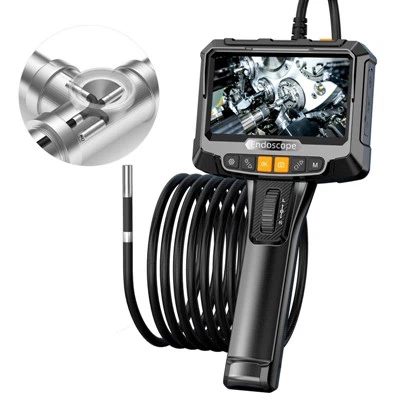
Electromagnetic interference (EMI) is a significant concern in the operation of electronic devices, including Pan Tilt Borehole Cameras. As a leading supplier of these cameras, we understand the importance of electromagnetic interference resistance and its impact on the performance of our products.
Understanding Electromagnetic Interference
Electromagnetic interference refers to the disruption of an electrical circuit by electromagnetic radiation from an external source. This interference can cause a variety of problems, such as signal distortion, reduced image quality, and even complete system failure. In the context of a Pan Tilt Borehole Camera, EMI can interfere with the camera's signal transmission, leading to poor image quality or loss of communication between the camera and the surface control unit.
There are two main types of electromagnetic interference: conducted and radiated. Conducted interference occurs when the interference is transmitted through electrical conductors, such as power cables or signal wires. Radiated interference, on the other hand, is transmitted through the air as electromagnetic waves. Both types of interference can affect the performance of a Pan Tilt Borehole Camera.
Factors Affecting Electromagnetic Interference Resistance
Several factors can affect the electromagnetic interference resistance of a Pan Tilt Borehole Camera. These include the design of the camera, the materials used in its construction, and the shielding techniques employed.
Design
The design of the camera plays a crucial role in its EMI resistance. A well-designed camera will have a compact and robust structure that minimizes the exposure of its internal components to electromagnetic fields. Additionally, the layout of the circuit board and the placement of components can also affect the camera's EMI resistance. For example, separating the power and signal circuits can help reduce the risk of interference.
Materials
The materials used in the construction of the camera can also impact its EMI resistance. Conductive materials, such as metals, can act as shields to block electromagnetic radiation. Therefore, cameras with metal housings or shielding can provide better protection against EMI. Additionally, the use of high-quality insulation materials can help prevent the leakage of electromagnetic fields.
Shielding Techniques
Shielding techniques are used to protect the camera from electromagnetic interference. There are several types of shielding, including electromagnetic shielding, electrostatic shielding, and magnetic shielding. Electromagnetic shielding involves the use of conductive materials to block electromagnetic radiation. Electrostatic shielding is used to protect against static electricity, while magnetic shielding is used to protect against magnetic fields.
Testing and Certification
To ensure the electromagnetic interference resistance of our Pan Tilt Borehole Cameras, we conduct rigorous testing and certification procedures. These tests are performed in accordance with international standards, such as the International Electrotechnical Commission (IEC) standards.
During the testing process, the camera is exposed to various electromagnetic fields to simulate real-world conditions. The performance of the camera is then evaluated to determine its EMI resistance. If the camera meets the required standards, it is certified as compliant.
Applications and Benefits
Pan Tilt Borehole Cameras with high electromagnetic interference resistance are suitable for a wide range of applications, including borehole inspection, oil well inspection, and deep well inspection. These cameras can provide clear and accurate images even in harsh electromagnetic environments.
Borehole Inspection
In borehole inspection, a Pan Tilt Borehole Camera is used to examine the condition of the borehole walls and the surrounding rock formations. The camera can detect cracks, fractures, and other defects that may affect the stability of the borehole. By using a camera with high EMI resistance, the inspection process can be more reliable and accurate. You can learn more about our Borewell Underwater Camera for this application.
Oil Well Inspection
Oil well inspection is another important application of Pan Tilt Borehole Cameras. These cameras can be used to inspect the interior of oil wells, including the casing, tubing, and production equipment. By providing clear images of the wellbore, the camera can help identify potential problems, such as corrosion, leaks, and blockages. Our Oil Well Inspection Camera is designed to withstand the harsh electromagnetic environment of oil wells.


Deep Well Inspection
Deep well inspection requires a camera that can operate at high depths and under high pressure. A Pan Tilt Borehole Camera with high EMI resistance can provide reliable performance in these challenging conditions. Our Deep Well Inspection Camera is specifically designed for deep well applications and offers excellent electromagnetic interference resistance.
Contact Us for Procurement
If you are interested in purchasing a Pan Tilt Borehole Camera with high electromagnetic interference resistance, please contact us. Our team of experts can provide you with detailed information about our products and help you choose the right camera for your specific needs. We look forward to discussing your requirements and working with you to find the best solution.
References
- International Electrotechnical Commission (IEC). Electromagnetic compatibility (EMC) standards.
- IEEE Standards Association. Standards for electromagnetic compatibility.