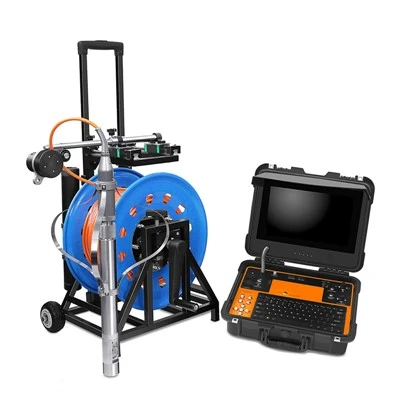
The viewing angle of a portable endoscope camera is a crucial factor that significantly impacts its functionality and application scope. As a supplier of Portable Endoscope Cameras, I have witnessed firsthand how different viewing angles can meet diverse user needs. In this blog, I will delve into the concept of the viewing angle of a portable endoscope camera, its importance, and how it relates to various industrial and inspection scenarios.


Understanding the Viewing Angle
The viewing angle of a camera refers to the extent of the observable area in front of the camera lens. It is typically measured in degrees. For a portable endoscope camera, the viewing angle determines how much of the surrounding environment can be captured in a single frame. A wider viewing angle allows the camera to cover a larger area, providing a more comprehensive view of the inspected object or space.
There are two main types of viewing angles: wide-angle and narrow-angle. Wide-angle endoscope cameras usually have a viewing angle of 90 degrees or more. These cameras are ideal for inspecting large areas or spaces where a broad overview is required. For example, when inspecting a large industrial tank or a wide pipeline, a wide-angle endoscope camera can quickly capture a wide field of view, reducing the need for multiple camera positions and saving time.
On the other hand, narrow-angle endoscope cameras have a smaller viewing angle, typically less than 90 degrees. These cameras are more suitable for detailed inspections of small objects or areas. They can provide a more focused and magnified view, allowing inspectors to detect small defects or features that might be missed with a wide-angle camera. For instance, when inspecting the internal components of a precision machine or a small electronic device, a narrow-angle endoscope camera can offer a clear and detailed view.
Importance of the Viewing Angle in Different Applications
Industrial Inspections
In industrial settings, the viewing angle of a portable endoscope camera plays a vital role in ensuring efficient and accurate inspections. Industrial Endoscope Camera are commonly used for inspecting machinery, engines, and pipelines. A wide-angle camera can be used to quickly assess the overall condition of a large machine or a long pipeline, identifying any major issues such as blockages or corrosion. Meanwhile, a narrow-angle camera can be employed for a more detailed inspection of specific components, such as gears or valves, to detect small cracks or wear.
Pipe Inspections
Pipe inspections are another area where the viewing angle is crucial. Endoscope Pipe Inspection Camera are used to examine the interior of pipes for damage, leaks, or obstructions. A wide-angle camera can provide a broad view of the pipe's interior, helping inspectors to quickly identify any large-scale issues. However, in some cases, a narrow-angle camera might be necessary to inspect the joints or small sections of the pipe more closely.
Automotive Inspections
In the automotive industry, portable endoscope cameras are used for engine inspections, checking for internal damage or wear. A wide-angle camera can be used to get a general overview of the engine's interior, while a narrow-angle camera can focus on specific parts such as pistons or valves. This combination of wide and narrow viewing angles allows mechanics to conduct thorough inspections and diagnose problems accurately.
Factors Affecting the Viewing Angle
Several factors can affect the viewing angle of a portable endoscope camera. One of the main factors is the design of the camera lens. Different lens designs can produce different viewing angles. For example, a fisheye lens can provide an extremely wide viewing angle, often close to 180 degrees. However, fisheye lenses also introduce distortion, which might not be suitable for all applications.
Another factor is the size of the camera head. Smaller camera heads generally have a more limited viewing angle compared to larger ones. This is because the size of the lens and the optical components are restricted by the size of the camera head. However, smaller camera heads are more flexible and can be inserted into smaller spaces, which is an advantage in some inspection scenarios.
The quality of the camera's image sensor also plays a role in the viewing angle. A high-quality image sensor can capture a wider and clearer field of view, enhancing the overall performance of the camera. Additionally, the camera's software and processing capabilities can affect how the captured image is displayed and how the viewing angle is utilized.
Choosing the Right Viewing Angle for Your Needs
When choosing a portable endoscope camera, it is essential to consider your specific inspection needs and the viewing angle that would be most suitable. Here are some guidelines to help you make the right choice:
- Determine the Inspection Area: If you need to inspect a large area or space, a wide-angle camera would be more appropriate. If you need to focus on small details, a narrow-angle camera might be a better choice.
- Consider the Accessibility: If the inspection area is small or difficult to access, a camera with a smaller camera head and a suitable viewing angle should be selected. Make sure the camera can be easily maneuvered into the desired position.
- Evaluate the Required Image Quality: For applications that require high-resolution images and accurate measurements, a camera with a high-quality image sensor and appropriate viewing angle is necessary.
As a supplier of Portable Endoscope Cameras, we offer a wide range of cameras with different viewing angles to meet various customer needs. Our Borescope Camera are designed with high-quality lenses and image sensors, providing clear and accurate images. Whether you need a wide-angle camera for large-scale inspections or a narrow-angle camera for detailed work, we have the right solution for you.
Conclusion
The viewing angle of a portable endoscope camera is a critical parameter that affects its performance and suitability for different applications. By understanding the concept of viewing angle, its importance, and the factors that affect it, you can make an informed decision when choosing a portable endoscope camera. As a reliable supplier, we are committed to providing high-quality cameras with the right viewing angles to help you achieve efficient and accurate inspections.
If you are interested in our Portable Endoscope Cameras or have any questions about the viewing angle or other features, please feel free to contact us for more information and to discuss your specific requirements. We look forward to working with you and providing the best solutions for your inspection needs.
References
- "Handbook of Endoscopy: Principles and Practice"
- "Industrial Inspection Technology: A Comprehensive Guide"
- "Advances in Portable Imaging Devices for Inspection Purposes"