Can borescope cameras be used for aerospace composite material inspections?
In the aerospace industry, the inspection of composite materials is of critical importance. Composite materials are widely used in modern aircraft due to their high strength - to - weight ratio, corrosion resistance, and design flexibility. As a borescope cameras supplier, I am frequently asked about the viability of using borescope cameras for aerospace composite material inspections. In this blog, I will explore this topic, analyzing the technical capabilities of borescope cameras, their advantages, limitations, and real - world applications.
Technical Capabilities of Borescope Cameras
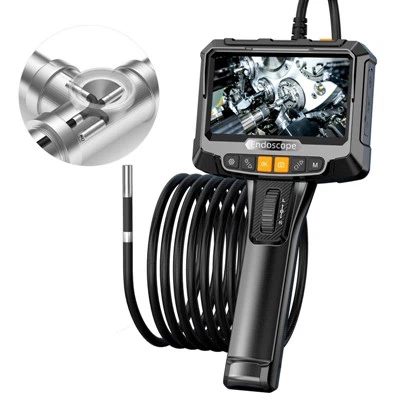
Borescope cameras are equipped with advanced imaging technology. They typically feature high - resolution cameras that can capture clear and detailed images even in low - light conditions. Most borescope cameras come with adjustable lighting systems, which are crucial for inspecting the internal structures of composite materials. For example, LED lights can provide bright and uniform illumination, allowing inspectors to detect small flaws such as cracks, delaminations, and porosity.
The flexibility of borescope camera probes is another significant advantage. These probes can be inserted into narrow and complex spaces within the composite components. Some borescope cameras have articulating probes that can be bent and maneuvered to access hard - to - reach areas. This is particularly useful in aerospace applications, where composite parts often have intricate geometries, such as honeycomb structures and curved sections.
Advantages of Using Borescope Cameras for Aerospace Composite Material Inspections
One of the primary advantages of borescope cameras is non - destructive testing (NDT). They allow inspectors to examine the internal condition of composite materials without causing any damage to the components. This is essential in the aerospace industry, where the safety and integrity of aircraft parts are of utmost importance. By avoiding damage during inspection, the useful life of the composite materials can be maximized, and maintenance costs can be reduced.
Borescope cameras also offer real - time inspection capabilities. Inspectors can view the images and videos captured by the camera immediately, enabling them to make on - the - spot decisions about the condition of the composite material. This real - time feedback can significantly speed up the inspection process, which is crucial for meeting tight production schedules and maintenance deadlines in the aerospace industry.
In addition, borescope cameras can be used for documentation purposes. The captured images and videos can be stored and used for future reference, quality control, and compliance verification. This documentation provides a reliable record of the inspection results, which can be valuable in case of safety audits or regulatory inspections.
Limitations of Borescope Cameras in Aerospace Composite Material Inspections
Despite their many advantages, borescope cameras also have some limitations. One of the main limitations is the restricted field of view. The camera's field of view is determined by the size and shape of the probe, as well as the camera lens. In some cases, it may be difficult to obtain a comprehensive view of the entire composite structure, especially if it is large or has a complex internal layout.
Another limitation is the difficulty in detecting subsurface flaws. Borescope cameras primarily provide visual inspection of the surface and near - surface areas. Flaws that are located deep within the composite material may not be visible using a borescope camera alone. In such cases, additional NDT methods, such as ultrasonic testing or X - ray inspection, may be required.
Real - World Applications of Borescope Cameras in Aerospace Composite Material Inspections
Borescope cameras are already being used in various aerospace applications. For example, they are used to inspect the internal structure of composite wings. The wings of modern aircraft are often made of composite materials to reduce weight and improve fuel efficiency. Borescope cameras can be inserted into the wing's internal cavities to check for any signs of damage, such as cracks or delaminations, which could compromise the wing's structural integrity.
They are also used in the inspection of composite engine components. The high - temperature and high - stress environment of aircraft engines can cause damage to composite materials over time. Borescope cameras can be used to inspect the internal parts of the engine, such as the compressor blades and the combustion chamber, to detect any early signs of wear or damage.
Comparison with Other Inspection Methods
When compared to other NDT methods, borescope cameras have their unique strengths and weaknesses. For instance, ultrasonic testing is very effective in detecting subsurface flaws in composite materials. However, it requires a trained operator and specialized equipment, and it may not be suitable for inspecting complex geometries. On the other hand, borescope cameras are relatively easy to use and can provide a visual inspection of the internal structure. They are also more cost - effective in some cases, especially for routine inspections.
X - ray inspection can provide detailed images of the internal structure of composite materials, including subsurface flaws. However, it involves the use of radiation, which requires special safety precautions and facilities. Borescope cameras, in contrast, do not pose any radiation risks and can be used in a wider range of environments.
Future Developments
The future of borescope cameras in aerospace composite material inspections looks promising. With the continuous development of imaging technology, we can expect to see borescope cameras with even higher resolution, better lighting systems, and more advanced articulating probes. These improvements will further enhance the inspection capabilities of borescope cameras, allowing for more accurate and comprehensive inspections of aerospace composite materials.
In addition, the integration of artificial intelligence (AI) and machine learning algorithms into borescope camera systems is a potential area of development. AI can be used to analyze the captured images and videos, automatically detecting and classifying flaws. This will not only improve the accuracy of inspections but also reduce the time and effort required by human inspectors.
Conclusion
In conclusion, borescope cameras can be effectively used for aerospace composite material inspections. They offer several advantages, including non - destructive testing, real - time inspection, and documentation capabilities. However, they also have some limitations, such as a restricted field of view and difficulty in detecting subsurface flaws. Despite these limitations, borescope cameras are already being widely used in the aerospace industry, and their role is likely to expand in the future with the advancement of technology.
If you are in the aerospace industry and are looking for reliable borescope cameras for composite material inspections, we are here to help. Our company offers a wide range of high - quality borescope cameras, such as the Endoscope Pipe Inspection Camera, Borescope Camera Inspection, and Sewer Endoscope. These cameras are designed to meet the specific needs of aerospace inspections, with features such as high - resolution imaging, adjustable lighting, and flexible probes.


We are committed to providing our customers with the best products and services. If you are interested in learning more about our borescope cameras or would like to discuss your specific inspection requirements, please feel free to contact us for a procurement discussion. We look forward to working with you to ensure the safety and quality of your aerospace composite materials.
References
- Smith, J. (2018). Non - Destructive Testing in the Aerospace Industry. Aerospace Journal, 35(2), 45 - 56.
- Johnson, A. (2019). Advances in Borescope Technology for Industrial Inspections. Industrial Inspection Review, 22(3), 78 - 89.
- Brown, C. (2020). Composite Materials in Modern Aircraft: Design, Manufacturing, and Inspection. Aircraft Engineering Journal, 40(4), 123 - 135.