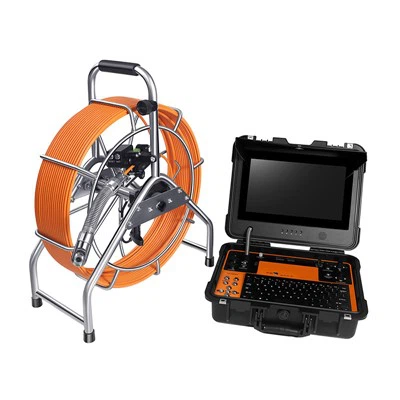
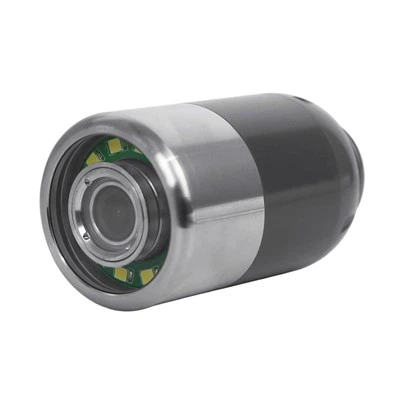
Hey there! As a supplier of pole cameras, I often get asked about all sorts of technical details. One question that pops up quite a bit is, “What is the lens aperture of pole cameras?” Well, let's dive right into it.
First off, let's understand what lens aperture is in general. The lens aperture is basically the opening in the lens through which light passes. It's measured in f - numbers, like f/1.2, f/2.8, f/4, etc. A smaller f - number means a larger aperture opening, and a larger f - number means a smaller aperture opening.
Let's talk about why aperture matters for pole cameras. Pole cameras are used in a variety of situations, like inspecting hard - to - reach places such as the insides of pipes, the tops of tall buildings, or the interiors of machinery. The amount of light that can enter the camera through the lens aperture is crucial for getting clear and sharp images.
In low - light conditions, a larger aperture (smaller f - number) is a real game - changer. For example, if you're using a Pole Inspection Camera to look inside a dark attic or a dimly lit duct, a camera with an aperture like f/1.8 or f/2.0 will let in more light. This results in brighter, less grainy images. You won't have to rely as much on the camera's built - in light source, which might not always be sufficient.
On the other hand, a smaller aperture (larger f - number) is useful when you need a greater depth of field. Depth of field refers to the range of distance in the image that appears sharp and in focus. If you're using a Telescopic Inspection Camera to inspect a long pipe, you want both the near and far parts of the pipe to be in focus. A smaller aperture, like f/8 or f/11, will give you a larger depth of field, so you can see more of the pipe clearly in a single shot.
Now, let's look at the different types of pole cameras and how their apertures vary.
Telescopic Video Cameras
Telescopic Video Cameras are great for getting a clear view of distant objects. These cameras often have adjustable apertures. Some high - end models can go from a relatively large aperture of f/2.8 for low - light situations to a smaller aperture of f/16 for maximum depth of field. This adjustability gives you the flexibility to adapt to different lighting and inspection needs.
For instance, if you're using a telescopic video camera to inspect the exterior of a tall tower during the day, you might set the aperture to f/11. This will ensure that the entire surface of the tower, from the nearest parts to the farthest, is in sharp focus. But if you're doing a night inspection of the same tower, you'd want to open up the aperture to something like f/2.8 to let in more light.
Fixed - Aperture Pole Cameras
Not all pole cameras have adjustable apertures. Some come with fixed apertures, which means the aperture size can't be changed. These cameras are usually more affordable and simpler to use. A common fixed aperture for entry - level pole cameras is f/4 or f/5.6.
While a fixed aperture might seem like a limitation, it can actually work well in certain situations. If you know that you'll mostly be using the camera in similar lighting conditions, a fixed - aperture camera can be a great choice. For example, if you're using a pole camera to inspect the inside of a well - lit factory machine on a regular basis, a camera with a fixed f/5.6 aperture will give you consistent results.
Choosing the Right Aperture for Your Needs
When you're in the market for a pole camera, it's important to think about the types of inspections you'll be doing. If you'll be working in a lot of dark or low - light environments, look for a camera with a large maximum aperture. This will give you better performance in those challenging lighting conditions.
On the other hand, if depth of field is your main concern, a camera with adjustable apertures or a smaller fixed aperture would be more suitable. Think about the nature of the objects you'll be inspecting and the distance between the camera and the object.
As a pole camera supplier, I've seen firsthand how the right aperture can make or break an inspection. A well - chosen aperture can save you time and effort by providing clear, detailed images right from the start.
So, whether you're a professional inspector or a DIY enthusiast looking to get a closer look at hard - to - reach places, understanding the lens aperture of pole cameras is essential. It helps you make an informed decision when purchasing a camera and ensures that you get the best possible results from your inspections.


If you're interested in learning more about our range of pole cameras or have questions about which aperture would be best for your specific needs, don't hesitate to reach out. We're here to help you find the perfect camera for your inspection tasks. Whether you need a Telescopic Inspection Camera, a Telescopic Video Camera, or a Pole Inspection Camera, we've got you covered. Let's start a conversation about your requirements and see how we can assist you in making a smart purchase.
References
- Photography textbooks on camera fundamentals
- Industry reports on inspection camera technology