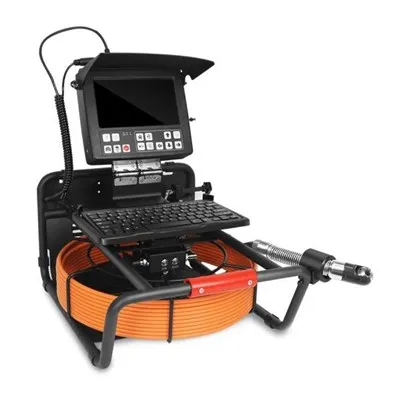
As a supplier of Pipe Robots, I'm often asked about the materials these remarkable machines can handle. Pipe robots are highly versatile tools designed to operate in various pipe environments, and their ability to deal with different materials is a key factor in their widespread application. In this blog, I'll delve into the types of materials that a Pipe Robot can handle, exploring their significance in different industries and applications.
1. Plastic Pipes
Plastic pipes are one of the most common materials in modern plumbing and drainage systems. They are lightweight, corrosion - resistant, and relatively easy to install. Pipe robots are well - suited for inspecting and maintaining plastic pipes made from materials such as PVC (Polyvinyl Chloride), PE (Polyethylene), and PP (Polypropylene).
PVC pipes are widely used in residential and commercial plumbing for water supply and drainage. Their smooth interior surface allows Pipe Robots to move easily. The Pipe Robot can be equipped with high - resolution cameras to detect any cracks, leaks, or blockages in the PVC pipes. For example, in an old apartment building, a Pipe Robot can be sent through the PVC drainage pipes to check for signs of wear and tear caused by years of use. The Pipe Robot can navigate through bends and joints, providing clear images of the pipe's interior condition.
PE pipes are commonly used in gas distribution and water supply systems, especially in underground applications. They are flexible and have good resistance to environmental stress cracking. A Pipe Robot can be used to inspect the integrity of PE pipes, ensuring that there are no hidden damages that could lead to gas leaks or water loss. The robot's sensors can detect changes in the pipe wall thickness and identify potential weak points.
PP pipes are often used in industrial applications where chemical resistance is required. The Pipe Robot can be customized with appropriate sensors to check for chemical corrosion and other forms of damage in PP pipes. This is crucial in industries such as chemical manufacturing, where any pipe failure can have serious consequences.
2. Metal Pipes
Metal pipes have been used for a long time in various industries due to their strength and durability. Pipe robots can handle different types of metal pipes, including steel, cast iron, and copper.
Steel pipes are widely used in oil and gas pipelines, as well as in industrial and commercial plumbing systems. They can withstand high pressure and temperature. However, steel pipes are prone to corrosion, especially in harsh environments. A Pipe Robot can be equipped with ultrasonic sensors to detect the thickness of the pipe wall and identify areas of corrosion. For example, in an offshore oil platform, a Pipe Robot can be deployed to inspect the sub - sea steel pipelines. The Pipe Crawler can move through the pipes, collecting data on the pipe's condition and helping to prevent potential leaks.
Cast iron pipes were commonly used in older plumbing systems, especially for sewer and drainage. They are heavy and have good resistance to mechanical damage. But over time, cast iron pipes can suffer from internal corrosion and root intrusion. A Pipe Robot can be used to assess the extent of damage in cast iron pipes. The robot's camera can capture detailed images of the pipe interior, showing any signs of rust, cracks, or blockages caused by roots.
Copper pipes are often used in residential plumbing for water supply due to their excellent corrosion resistance and antimicrobial properties. A Pipe Robot can be used to inspect copper pipes for any signs of pitting corrosion or other forms of damage. This is important to ensure the quality of the water supply and the longevity of the plumbing system.
3. Concrete Pipes
Concrete pipes are commonly used in stormwater drainage systems, sewer systems, and large - scale infrastructure projects. They are strong and can withstand heavy loads. Pipe robots can play a vital role in inspecting concrete pipes.
In stormwater drainage systems, concrete pipes are prone to damage from debris, erosion, and ground movement. A Pipe Robot can be used to check for cracks, spalling, and blockages in the concrete pipes. The Storm Sewer Camera attached to the robot can provide clear images of the pipe interior, allowing engineers to assess the condition of the pipes and plan for necessary repairs or maintenance.
In sewer systems, concrete pipes may be affected by chemical corrosion from sewage and other waste materials. A Pipe Robot can be equipped with sensors to detect the presence of corrosive substances and evaluate the extent of damage to the pipe wall. This information is crucial for ensuring the proper functioning of the sewer system and preventing environmental pollution.
4. Composite Pipes
Composite pipes are made by combining different materials to achieve specific properties. They are becoming increasingly popular in various industries due to their lightweight, high - strength, and corrosion - resistant characteristics.
Fiber - reinforced polymer (FRP) pipes are a type of composite pipe that is widely used in chemical processing plants, offshore platforms, and water treatment facilities. A Pipe Robot can be used to inspect FRP pipes for any delamination, cracking, or other forms of damage. The robot's sensors can detect changes in the pipe's mechanical properties, ensuring the safety and reliability of the piping system.
Another type of composite pipe is the concrete - lined steel pipe, which combines the strength of steel with the corrosion - resistance of concrete. A Pipe Robot can be used to check the integrity of the concrete lining and the steel pipe, detecting any signs of separation or damage between the two materials.
5. Other Special - Purpose Materials
In addition to the common materials mentioned above, Pipe Robots can also handle pipes made of other special - purpose materials.
For example, in the semiconductor industry, pipes made of quartz are used to transport high - purity gases and chemicals. A Pipe Robot can be designed to operate in these cleanroom environments, inspecting the quartz pipes for any contaminants or damage. The robot needs to be made of materials that do not generate particles and should be able to operate with high precision.
In the food and beverage industry, pipes made of stainless steel with special coatings are used to ensure hygiene and prevent contamination. A Pipe Robot can be used to inspect these pipes, checking for any signs of wear on the coating, cracks in the pipe, or the presence of foreign objects.


Conclusion
The ability of Pipe Robots to handle a wide range of materials makes them an indispensable tool in various industries. Whether it's inspecting plastic pipes in a residential building, steel pipes in an oil refinery, or concrete pipes in a large - scale infrastructure project, Pipe Robots can provide valuable information about the condition of the pipes.
If you are in need of Pipe Robots for your pipe inspection and maintenance needs, we are here to help. Our Pipe Robots are designed with the latest technology and can be customized to meet your specific requirements. We have a team of experts who can provide you with professional advice and support. Contact us today to start a discussion about your project and explore how our Pipe Robots can benefit your operations.
References
- ASME (American Society of Mechanical Engineers) standards on pipe inspection and maintenance.
- ASTM (American Society for Testing and Materials) specifications for different pipe materials.
- Industry reports on the use of Pipe Robots in various sectors.