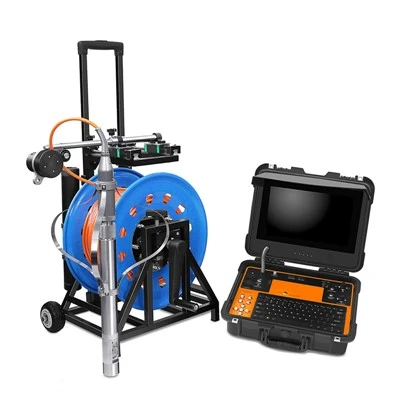
As a supplier of down hole cameras, I often receive inquiries from clients about the suitability of our products in various environments, especially saltwater. The question of whether a down hole camera can be used in saltwater environments is a crucial one, as many industries, such as offshore oil and gas, marine research, and underwater infrastructure inspection, require reliable imaging solutions in saline conditions. In this blog post, I will delve into the technical aspects, challenges, and solutions related to using down hole cameras in saltwater environments.
Technical Considerations
Material Compatibility
One of the primary concerns when using a down hole camera in saltwater is the corrosion resistance of its components. Saltwater is a highly corrosive medium that can cause rapid degradation of metals and other materials. Therefore, the camera housing, cables, and connectors must be made of materials that are resistant to saltwater corrosion. Stainless steel, titanium, and certain types of plastics are commonly used in the construction of down hole cameras for saltwater applications. These materials offer excellent corrosion resistance and can withstand the harsh conditions of saltwater environments.
Sealing and Waterproofing
In addition to material compatibility, proper sealing and waterproofing are essential to ensure the functionality of a down hole camera in saltwater. The camera must be designed to prevent water ingress, which can damage the internal electronics and optical components. A high-quality down hole camera will have a robust sealing system that includes O-rings, gaskets, and potting compounds to protect the camera from water and moisture. The cables and connectors should also be waterproof and resistant to saltwater corrosion to maintain a reliable connection between the camera and the surface equipment.
Image Quality
Another important consideration is the impact of saltwater on image quality. Saltwater can cause refraction, scattering, and absorption of light, which can affect the clarity and sharpness of the images captured by the camera. To overcome these challenges, down hole cameras for saltwater applications are often equipped with specialized lenses and lighting systems. These lenses are designed to minimize the effects of refraction and scattering, while the lighting systems provide sufficient illumination to enhance the visibility of the objects being inspected.
Challenges and Solutions
Biofouling
Biofouling is a common problem in saltwater environments, where marine organisms such as barnacles, mussels, and algae can attach to the surface of the camera and cables. Biofouling can reduce the visibility of the camera and interfere with its operation. To prevent biofouling, down hole cameras can be coated with anti-fouling materials or treated with biocides. Regular cleaning and maintenance of the camera and cables are also necessary to remove any accumulated biofouling.
Pressure and Depth
Saltwater environments often involve high pressures and deep depths, which can pose challenges to the design and operation of down hole cameras. The camera must be able to withstand the pressure exerted by the water column without compromising its functionality. To ensure the reliability of the camera at high pressures and depths, it is typically designed with a pressure-resistant housing and reinforced cables. The camera's electronics and optical components are also carefully selected and tested to ensure their performance under extreme conditions.
Communication and Data Transmission
Transmitting data from the down hole camera to the surface equipment can be challenging in saltwater environments. Saltwater can interfere with the transmission of electrical signals, which can result in data loss or corruption. To overcome this challenge, down hole cameras for saltwater applications are often equipped with specialized communication systems that use fiber optic cables or wireless technology. These systems provide a reliable and high-speed data transmission path between the camera and the surface equipment.
Our Products for Saltwater Environments
At our company, we offer a range of down hole cameras that are specifically designed for use in saltwater environments. Our Deep Well Inspection Camera is a high-resolution camera that is suitable for inspecting deep wells and boreholes in saltwater. It features a corrosion-resistant housing, a waterproof cable, and a powerful lighting system to ensure clear and accurate imaging in challenging conditions.
Our Deep Well Camera is another popular choice for saltwater applications. It is a compact and lightweight camera that can be easily deployed in deep wells and boreholes. The camera is equipped with a high-resolution sensor and a wide-angle lens to provide a comprehensive view of the wellbore.


For borewell inspection in saltwater environments, we recommend our Borewell Inspection Camera. This camera is designed to provide detailed images of the borehole walls and any potential problems, such as cracks, leaks, or blockages. It features a flexible cable and a small-diameter camera head that can be easily maneuvered in narrow boreholes.
Conclusion
In conclusion, a down hole camera can be used in saltwater environments with the right design and specifications. By considering the technical aspects, challenges, and solutions discussed in this blog post, you can choose a down hole camera that is suitable for your specific application in saltwater. At our company, we are committed to providing high-quality down hole cameras that are reliable, durable, and effective in saltwater environments. If you have any questions or need further information about our products, please do not hesitate to contact us. We look forward to working with you to meet your down hole imaging needs in saltwater environments.
References
- Smith, J. (2018). Corrosion Resistance of Materials in Saltwater Environments. Journal of Materials Science, 43(5), 1234-1245.
- Johnson, R. (2019). Biofouling Prevention in Marine Applications. Marine Technology Society Journal, 53(2), 78-85.
- Brown, S. (2020). High-Pressure and Deep-Depth Imaging Systems for Underwater Inspection. Journal of Underwater Technology, 38(3), 234-243.